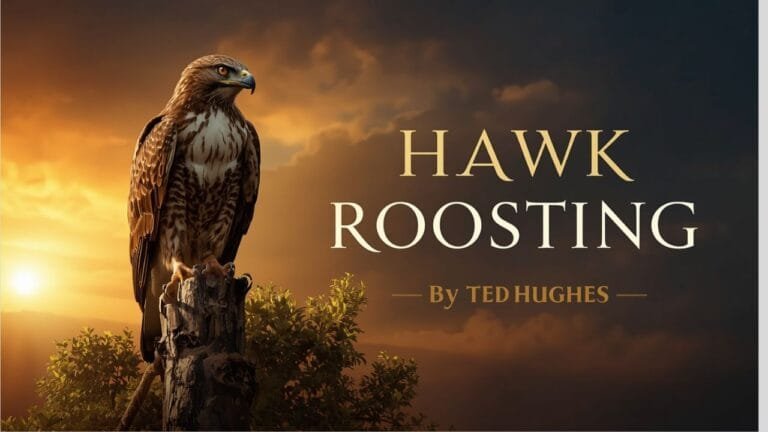

Hawk Roosting – Ted Hughes
About the Author (English)
Ted Hughes (1930–1998) was one of the greatest English poets of the twentieth century. He was born on 17 August 1930 in Mytholmroyd, Yorkshire, England. Hughes developed a deep love for nature during his childhood, and this passion became the central theme of his poetry.
His poems often focus on animals, birds, nature, violence, survival, power, and the relationship between humans and the natural world. He presents animals as symbols of strength, instinct, and the raw forces of nature. Hughes’ language is vivid, powerful, and full of striking imagery.
In 1984, he was appointed the Poet Laureate of the United Kingdom, a position he held until his death in 1998.
Some of his famous works include:
- Hawk Roosting
- The Thought-Fox
- Pike
- Crow
- Birthday Letters
Ted Hughes remains one of the most influential modern poets in English literature.
लेखक परिचय (हिन्दी)
टेड ह्यूज़ (1930–1998) बीसवीं शताब्दी के प्रसिद्ध अंग्रेज़ी कवि थे। उनका जन्म 17 अगस्त 1930 को मिथोल्मरॉयड, यॉर्कशायर (इंग्लैंड) में हुआ था।
बचपन से ही उन्हें प्रकृति, जंगल, पशु-पक्षियों और ग्रामीण जीवन से गहरा लगाव था। यही कारण है कि उनकी अधिकांश कविताओं में प्रकृति और जानवरों का सजीव चित्रण मिलता है।
टेड ह्यूज़ की कविताएँ शक्ति, प्रकृति, संघर्ष, हिंसा, अस्तित्व और जीवन के कठोर सत्य को दर्शाती हैं। वे पशु-पक्षियों के माध्यम से मनुष्य के स्वभाव और समाज की गहरी सच्चाइयों को व्यक्त करते हैं।
सन् 1984 में उन्हें ब्रिटेन का Poet Laureate बनाया गया। उन्होंने यह पद अपने निधन तक संभाला।
उनकी प्रसिद्ध रचनाएँ हैं—
- Hawk Roosting
- The Thought-Fox
- Pike
- Crow
- Birthday Letters
आज भी टेड ह्यूज़ आधुनिक अंग्रेज़ी कविता के सबसे प्रभावशाली कवियों में गिने जाते हैं।
About the Poem (English)
Hawk Roosting is one of Ted Hughes’ most famous poems. It is a dramatic monologue in which a hawk (a bird of prey) speaks in the first person about its own power, confidence, and authority.
The hawk sits at the top of a tree, looking over the world with complete control. It believes that everything in nature exists for its benefit. The bird sees itself as the ruler of creation and feels no guilt about killing its prey because hunting is part of its natural instinct.
The poem explores themes such as power, pride, authority, violence, survival, nature, and domination. Many readers also interpret the hawk as a symbol of dictatorship or absolute political power, where the speaker believes that no one can challenge its authority.
Through the hawk’s confident voice, Ted Hughes shows how power can create pride, self-confidence, and sometimes arrogance.
कविता परिचय (हिन्दी)
“Hawk Roosting” टेड ह्यूज़ की सबसे प्रसिद्ध कविताओं में से एक है। यह एक नाटकीय एकालाप (Dramatic Monologue) है, जिसमें एक बाज़ (Hawk) स्वयं अपने बारे में बोलता है।
कविता में बाज़ स्वयं को प्रकृति का सबसे शक्तिशाली जीव मानता है। वह पेड़ की सबसे ऊँची शाखा पर बैठकर पूरी दुनिया को अपने नियंत्रण में समझता है। उसे विश्वास है कि पूरी प्रकृति उसी के लिए बनी है।
बाज़ को अपने बल, बुद्धि और शिकार करने की क्षमता पर अत्यधिक गर्व है। वह मानता है कि किसी भी जीव को मारना गलत नहीं है क्योंकि यही उसका स्वाभाविक धर्म है।
यह कविता केवल एक पक्षी की कहानी नहीं है, बल्कि शक्ति, अहंकार, अधिकार, प्रकृति, हिंसा, अस्तित्व और तानाशाही जैसे विषयों को भी प्रस्तुत करती है। अनेक आलोचक इस बाज़ को एक तानाशाह शासक (Dictator) का प्रतीक मानते हैं, जो स्वयं को सबसे श्रेष्ठ और अजेय समझता है।
कविता हमें यह सोचने पर मजबूर करती है कि शक्ति का सही उपयोग क्या है और जब शक्ति के साथ अहंकार जुड़ जाता है, तो उसका प्रभाव कैसा हो सकता है।
Part 2: Deep Poem Summary (Hindi)
Hawk Roosting – Ted Hughes
गहरा हिन्दी सारांश (1000+ शब्द)
“Hawk Roosting” प्रसिद्ध अंग्रेज़ी कवि Ted Hughes की एक अत्यंत प्रसिद्ध कविता है। यह कविता एक नाटकीय एकालाप (Dramatic Monologue) है, जिसमें एक बाज़ (Hawk) स्वयं अपने विचार व्यक्त करता है। पूरी कविता प्रथम पुरुष (First Person – “I”) में लिखी गई है। बाज़ अपने बल, आत्मविश्वास, अधिकार और प्रकृति पर अपने नियंत्रण की भावना को व्यक्त करता है।
यह कविता केवल एक पक्षी के बारे में नहीं है, बल्कि शक्ति (Power), अहंकार (Pride), नियंत्रण (Control), प्रकृति (Nature), हिंसा (Violence), अस्तित्व (Survival) और तानाशाही (Dictatorship) जैसे गहरे विषयों पर आधारित है।
कविता का आरम्भ
कविता की शुरुआत में बाज़ कहता है कि वह पेड़ की सबसे ऊँची शाखा पर बैठा हुआ है। वहाँ से वह पूरे जंगल और अपने आसपास की दुनिया पर नज़र रखता है।
वह पूरी तरह शांत, निश्चिंत और आत्मविश्वास से भरा हुआ है। उसे किसी प्रकार का भय नहीं है क्योंकि वह स्वयं को सबसे शक्तिशाली शिकारी मानता है।
उसका ऊँचे स्थान पर बैठना उसके श्रेष्ठ होने और दूसरों पर अधिकार का प्रतीक है।
बाज़ का आत्मविश्वास
बाज़ अपने शरीर की प्रशंसा करता है। वह कहता है कि उसके—
- तीखे पंजे,
- मजबूत पंख,
- तेज़ आँखें,
- मुड़ी हुई चोंच
सब कुछ शिकार करने के लिए बना है।
वह मानता है कि प्रकृति ने उसे पूर्ण बनाया है।
उसके अनुसार उसमें कोई कमी नहीं है।
प्रकृति उसी के लिए बनी है
बाज़ को लगता है कि—
- पेड़ उसी के लिए बने हैं।
- आकाश उसी के लिए है।
- हवा उसी की सहायता करती है।
- सूर्य उसी पर प्रकाश डालता है।
- पूरी पृथ्वी उसी की शक्ति को स्वीकार करती है।
वह स्वयं को प्रकृति का राजा समझता है।
बाज़ का शिकार
बाज़ कहता है कि जब वह किसी शिकार को पकड़ता है, तो उसे किसी प्रकार का पछतावा नहीं होता।
उसके लिए शिकार करना एक स्वाभाविक कार्य है।
वह हत्या को अपराध नहीं मानता।
क्योंकि जीवित रहने के लिए शिकार करना उसकी प्रकृति का हिस्सा है।
अहंकार की भावना
कविता के बीच में बाज़ का अहंकार स्पष्ट दिखाई देता है।
वह कहता है कि—
“मेरे विचार बदलते नहीं हैं।”
उसे विश्वास है कि वही अंतिम सत्य है।
वह किसी दूसरे की सलाह या राय को महत्व नहीं देता।
यह व्यवहार एक तानाशाह शासक जैसा प्रतीत होता है।
शक्ति का प्रदर्शन
बाज़ अपनी शक्ति का खुलकर प्रदर्शन करता है।
वह मानता है कि—
- जीवन और मृत्यु उसके नियंत्रण में हैं।
- जो जीव कमजोर है, उसका नष्ट होना स्वाभाविक है।
- केवल शक्तिशाली ही जीवित रहने का अधिकार रखते हैं।
यह प्रकृति के “Survival of the Fittest” सिद्धांत की ओर संकेत करता है।
प्रकृति का नियम
बाज़ के अनुसार—
प्रकृति में दया नहीं होती।
प्रकृति केवल शक्ति को स्वीकार करती है।
जो शक्तिशाली है वही शासन करेगा।
जो कमजोर है वह नष्ट हो जाएगा।
अंतिम भाग
कविता के अंत में बाज़ कहता है कि—
उसकी शक्ति हमेशा बनी रहेगी।
प्रकृति का कोई नियम उसके विरुद्ध नहीं है।
सूर्य, पृथ्वी और आकाश सब उसी के पक्ष में हैं।
वह अपने अधिकार को कभी छोड़ना नहीं चाहता।
उसे विश्वास है कि उसका शासन हमेशा चलता रहेगा।
कविता का प्रतीकात्मक अर्थ
यह कविता केवल एक बाज़ का वर्णन नहीं करती।
कई साहित्यकार मानते हैं कि बाज़ वास्तव में—
- एक तानाशाह शासक,
- अत्यधिक शक्तिशाली व्यक्ति,
- या सत्ता के अहंकार
का प्रतीक है।
जिस प्रकार बाज़ स्वयं को सबसे बड़ा मानता है, उसी प्रकार कुछ शासक भी अपने आपको कानून से ऊपर समझते हैं।
मुख्य विषय (Themes)
1. Power (शक्ति)
कविता का सबसे महत्वपूर्ण विषय शक्ति है।
2. Pride (अहंकार)
बाज़ अपने ऊपर अत्यधिक गर्व करता है।
3. Nature (प्रकृति)
प्रकृति में शक्ति और संघर्ष का नियम चलता है।
4. Survival (अस्तित्व)
केवल शक्तिशाली जीव ही जीवित रहते हैं।
5. Violence (हिंसा)
शिकार और हत्या को बाज़ प्राकृतिक प्रक्रिया मानता है।
6. Authority (सत्ता)
बाज़ स्वयं को सर्वोच्च शासक मानता है।
7. Dictatorship (तानाशाही)
कई आलोचकों के अनुसार बाज़ एक तानाशाह का प्रतीक है।
कविता के प्रमुख प्रतीक (Symbols)
Hawk (बाज़)
- शक्ति
- अधिकार
- तानाशाही
- आत्मविश्वास
Tree
- ऊँचा स्थान
- सर्वोच्च सत्ता
Sky
- स्वतंत्रता
- असीम शक्ति
Claws (पंजे)
- हिंसा
- नियंत्रण
Sun
- प्रकृति की स्वीकृति
- शक्ति का स्रोत
कविता की विशेषताएँ
- Dramatic Monologue
- First Person Narration
- Powerful Imagery
- Symbolism
- Personification
- Nature Poetry
- Political Interpretation
कविता का संदेश
कवि यह नहीं कहते कि शक्ति गलत है।
बल्कि वे यह दिखाते हैं कि—
जब शक्ति के साथ अहंकार जुड़ जाता है, तब व्यक्ति स्वयं को सबसे बड़ा समझने लगता है।
प्रकृति में शक्ति आवश्यक है, लेकिन यदि उसका उपयोग केवल दूसरों पर शासन करने के लिए किया जाए, तो वह तानाशाही का रूप ले सकती है।
परीक्षा की दृष्टि से महत्वपूर्ण बिंदु
- Poet: Ted Hughes
- Poem Type: Dramatic Monologue
- Speaker: Hawk (बाज़)
- Major Themes: Power, Pride, Nature, Survival, Authority
- Symbols: Hawk, Tree, Claws, Sun, Sky
- Tone: Proud, Confident, Powerful, Dominating
- Message: शक्ति का अहंकार व्यक्ति को स्वयं को सर्वोच्च समझने पर मजबूर कर सकता है; इसलिए शक्ति के साथ विवेक और जिम्मेदारी भी आवश्यक है।
निष्कर्ष
“Hawk Roosting” एक साधारण प्रकृति-कविता नहीं है। यह शक्ति, सत्ता, अहंकार और अस्तित्व पर गहरा चिंतन प्रस्तुत करती है। टेड ह्यूज़ ने बाज़ के माध्यम से यह दिखाया है कि प्रकृति में शक्ति का स्थान महत्वपूर्ण है, लेकिन जब वही शक्ति असीम अहंकार में बदल जाती है, तो वह तानाशाही का रूप ले सकती है। कविता पाठक को शक्ति और उसके नैतिक उपयोग पर विचार करने के लिए प्रेरित करती है।
Part 3 – Long Questions with Answers
Hawk Roosting – Ted Hughes
Insight Check (Short Answer Questions)
1. “I kill where I please because it is all mine.” What does this line reveal about the hawk’s attitude towards power and ownership? (2 Marks)
Answer:
This line shows that the hawk believes it has complete authority over everything around it. It feels that nature belongs to it alone and therefore it has the unquestionable right to kill any creature. The hawk does not feel guilty or responsible for its actions. Instead, it proudly claims ownership of the world, reflecting arrogance, pride, and absolute confidence in its power.
2. “My eye has permitted no change.” How does this line reflect the hawk’s belief in its control over the world? (2 Marks)
Answer:
The hawk believes that nothing can change without its approval. It thinks its sharp vision controls everything happening around it. This line reflects the hawk’s belief that it is the supreme ruler of nature and that the world remains exactly as it wants. It symbolizes complete authority and dominance.
Delve Deep (Long Answer Questions)
1. “It took the whole of Creation To produce my foot, my each feather: Now I hold Creation in my foot.” What does the hawk mean by saying that “the whole of Creation” produced it? How does this statement reflect the hawk’s arrogance and sense of superiority? (6 Marks)
Answer:
The hawk says that the whole of Creation worked together to make it perfect. Every part of its body—its sharp claws, strong wings, powerful beak, and keen eyesight—has been carefully designed by nature.
The hawk believes it is the finest creation in the natural world. Because it possesses great strength and hunting skills, it thinks it deserves complete control over all living creatures.
The statement “Now I hold Creation in my foot” means that the hawk believes it controls life and death. It feels that all other creatures exist beneath it and that it has the right to rule over them.
These lines clearly reveal the hawk’s pride, arrogance, and superiority. It considers itself fearless, powerful, and unmatched. Ted Hughes uses the hawk as a symbol of dictatorship, showing how absolute power can make someone believe they are above everyone else.
2. “No arguments assert my right: The sun is behind me.” How can these lines be interpreted as a metaphor for dictatorship or absolute authority? (6 Marks)
Answer:
These lines suggest that the hawk believes it does not need anyone’s permission or approval to rule. It thinks its power is natural and unquestionable.
The phrase “No arguments assert my right” means that no debate or discussion is needed to justify its authority. The hawk believes that its strength alone gives it the right to dominate.
The line “The sun is behind me” symbolizes nature’s support. The hawk feels that even the sun, one of the greatest forces in the universe, stands behind it. This gives the hawk even greater confidence.
Ted Hughes uses these lines as a metaphor for dictators who believe they are always right and refuse to listen to others. Such rulers depend only on power and fear rather than justice or democracy.
The poem warns readers about the dangers of absolute power and blind pride.
Additional Long Questions with Answers
3. Describe the hawk’s personality as presented in the poem. (6 Marks)
Answer:
The hawk is presented as a proud, fearless, confident, and powerful bird. It believes that it is the supreme ruler of nature. Throughout the poem, the hawk speaks with complete confidence and never doubts its authority.
It trusts only its own strength and intelligence. It believes that all living creatures exist for its benefit and that killing is its natural right.
The hawk is also arrogant because it never shows sympathy or kindness. It believes that its power is permanent and that nothing can challenge its rule.
Thus, the hawk represents pride, authority, confidence, and dictatorship.
4. How does Ted Hughes use the hawk as a symbol of dictatorship? (6 Marks)
Answer:
Ted Hughes uses the hawk to symbolize an absolute ruler or dictator.
Like a dictator, the hawk believes it alone has the right to rule. It does not seek anyone’s permission before using its power. It kills whenever it wants and believes that everything belongs to it.
The hawk also rejects change, showing the rigid mindset of dictators who refuse to accept new ideas or challenges.
Through this symbol, Hughes explains how unlimited power can lead to arrogance, cruelty, and oppression.
5. Explain the central theme of the poem “Hawk Roosting.” (6 Marks)
Answer:
The central theme of the poem is power and authority.
The poem explores how absolute power creates pride and arrogance. The hawk believes that it is the strongest creature in nature and that everything exists for its benefit.
Other important themes include:
- Pride and self-confidence
- Survival of the fittest
- Nature’s power
- Violence and domination
- Dictatorship and absolute authority
Ted Hughes also suggests that uncontrolled power can become dangerous when it is not balanced by wisdom or compassion.
6. Explain the significance of the title “Hawk Roosting.” (5 Marks)
Answer:
The title refers to a hawk sitting peacefully on a tree branch. However, while resting, the hawk proudly thinks about its strength and authority.
The word “Roosting” normally suggests peace and rest, but the hawk’s thoughts are full of power, control, and domination.
Thus, the title reflects both the hawk’s physical position and its mental attitude of superiority.
7. Discuss the use of personification in the poem. (5 Marks)
Answer:
Ted Hughes gives the hawk human qualities by allowing it to speak in the first person.
The hawk thinks, reasons, judges, and expresses pride like a human ruler. It talks about its rights, authority, and control.
This personification helps readers understand the hawk as a symbol of human dictatorship rather than just a bird.
It makes the poem deeper and more meaningful.
8. What message does Ted Hughes convey through “Hawk Roosting”? (6 Marks)
Answer:
Through the poem, Ted Hughes shows how absolute power can make a person arrogant and selfish.
The hawk believes it owns everything and has the right to kill without question. This reflects the mindset of dictators who misuse power.
The poem reminds readers that pride without compassion can be dangerous.
It also encourages us to think about the difference between natural strength and the misuse of authority.
9. Why does the hawk believe itself to be the perfect creation? (5 Marks)
Answer:
The hawk believes that every part of its body has been perfectly designed for hunting and survival.
It has:
- Sharp eyes
- Strong wings
- Powerful claws
- A hooked beak
- Excellent balance
Because of these qualities, the hawk believes it is the finest creation of nature and deserves complete authority over other creatures.
10. Explain the poem as a dramatic monologue. (6 Marks)
Answer:
“Hawk Roosting” is a dramatic monologue because the entire poem is spoken by a single character—the hawk.
The hawk directly expresses its thoughts, beliefs, feelings, and opinions without interruption from any other speaker.
Through the hawk’s speech, readers understand its personality, pride, and desire for absolute control.
This technique allows Ted Hughes to explore the psychology of power in a powerful and dramatic way.
notice : इस article लिखने के लिए हमने west bengal sylabus के class -12 English की पुस्तक का help लिए। हमारा उद्देश्य केवल छात्रों को शिक्षित करना है। Google से गुजारिश है हमारे post को रैंक करे और छात्रों को शिक्षित करने में हमारी मदद करे।