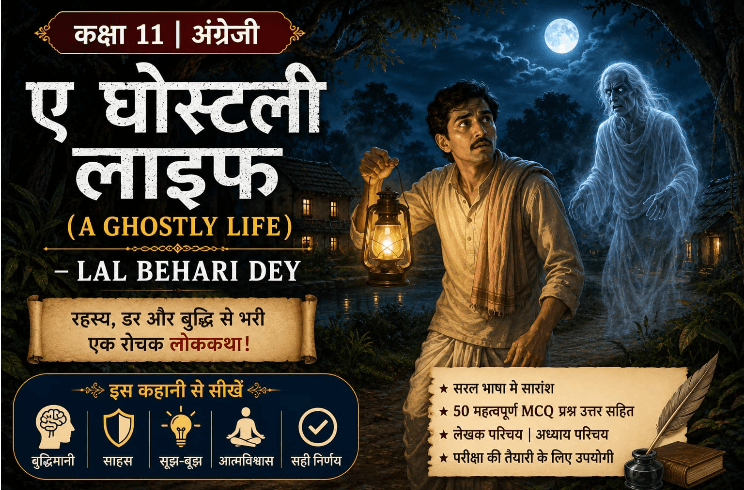

A Ghostly Life – Lal Behari Dey
(Class 11 English)
✅ About the Author (English)
Lal Behari Dey (1824–1892) was a renowned Indian writer, journalist, educator, and social reformer. He was born in 1824 in Bengal, India. He is best remembered for collecting and translating Bengali folk tales into English, making the rich traditions of Indian folklore known to readers around the world.
Lal Behari Dey studied at Bishop’s College, Calcutta, and later worked as a teacher, journalist, and Christian missionary. His writings reflect rural Bengal, its customs, beliefs, traditions, and everyday life. He used simple language, humour, and moral lessons to make his stories interesting as well as meaningful.
His famous works include:
- Folk-Tales of Bengal (1883)
- Bengal Peasant Life (Govinda Samanta)
Lal Behari Dey is regarded as one of the pioneers of Indian writing in English and played an important role in preserving India’s folk literature.
✅ लेखक परिचय (Hindi)
लाल बिहारी डे (1824–1892) भारत के प्रसिद्ध लेखक, पत्रकार, शिक्षक और समाज सुधारक थे। उनका जन्म 1824 में बंगाल (भारत) में हुआ था।
वे विशेष रूप से बंगाल की लोककथाओं (Folk Tales) को एकत्रित कर अंग्रेज़ी भाषा में प्रकाशित करने के लिए प्रसिद्ध हैं। उनकी रचनाओं ने भारतीय संस्कृति, ग्रामीण जीवन और लोकविश्वास को विश्वभर के पाठकों तक पहुँचाया।
उन्होंने बिशप्स कॉलेज, कलकत्ता में शिक्षा प्राप्त की। बाद में वे शिक्षक, पत्रकार और लेखक के रूप में कार्य करने लगे।
उनकी कहानियों में भारतीय गाँवों का जीवन, लोकविश्वास, नैतिक शिक्षा, हास्य और मानवीय मूल्यों का सुंदर चित्रण मिलता है। उनकी भाषा सरल और प्रभावशाली है, जिससे हर आयु का पाठक आसानी से जुड़ सकता है।
उनकी प्रमुख रचनाएँ हैं—
- Folk-Tales of Bengal (1883)
- Bengal Peasant Life (Govinda Samanta)
भारतीय अंग्रेज़ी साहित्य और लोककथाओं के संरक्षण में उनका योगदान अत्यंत महत्वपूर्ण माना जाता है।
✅ About the Chapter (English)
A Ghostly Life is an interesting Bengali folk tale collected by Lal Behari Dey. Like many traditional folk stories, it combines mystery, humour, imagination, and moral values.
The story presents the experiences of a person whose life becomes connected with supernatural events. Although ghosts and mysterious incidents appear in the story, the main purpose is not to create fear but to entertain readers while teaching valuable lessons about human nature, courage, wisdom, and practical thinking.
The tale reflects the beliefs and traditions of rural Bengal, where stories about ghosts and spirits have been passed down through generations. Through simple narration, the author reminds readers that fear often comes from imagination, while intelligence and calmness help people overcome difficult situations.
✅ अध्याय परिचय (Hindi)
A Ghostly Life लाल बिहारी डे द्वारा संकलित एक रोचक बंगाली लोककथा है।
इस कहानी में रहस्य, रोमांच, हास्य और लोकविश्वास का सुंदर मिश्रण देखने को मिलता है। कहानी का मुख्य उद्देश्य केवल भूत-प्रेत की घटनाओं का वर्णन करना नहीं है, बल्कि उनके माध्यम से जीवन की महत्वपूर्ण सीख देना है।
कहानी में एक व्यक्ति के जीवन से जुड़ी ऐसी घटनाएँ दिखाई गई हैं जिनमें अलौकिक (Supernatural) अनुभवों का वर्णन है। इन घटनाओं के माध्यम से लेखक यह संदेश देते हैं कि कठिन परिस्थितियों में घबराने के बजाय बुद्धिमानी, धैर्य और साहस से काम लेना चाहिए।
यह कहानी बंगाल की लोकसंस्कृति और ग्रामीण समाज में प्रचलित भूत-प्रेत संबंधी मान्यताओं को भी दर्शाती है। साथ ही यह सिखाती है कि कई बार हमारा डर हमारी कल्पना से पैदा होता है, जबकि समझदारी हमें हर समस्या से बाहर निकाल सकती है।
✅ Original Summary (English)
A Ghostly Life is a fascinating folk tale that blends mystery with valuable life lessons.
The story revolves around a person who unexpectedly becomes involved in strange and ghostly experiences. These mysterious incidents make life difficult for him and create fear among the people around him.
Instead of giving up, the central character gradually learns to face the unknown with courage and wisdom. As the story progresses, it becomes clear that fear alone cannot solve problems. Calm thinking, confidence, and intelligence are far more effective than panic.
The tale also reflects the traditional beliefs of Bengali villages, where ghost stories have been part of everyday life for centuries. However, beyond the supernatural elements, the story emphasizes human values such as bravery, patience, presence of mind, and self-control.
In the end, readers realize that true strength lies not in physical power but in a fearless mind and wise decisions.
✅ मौलिक सारांश (Hindi)
A Ghostly Life एक रोचक लोककथा है जिसमें रहस्य, रोमांच और नैतिक शिक्षा का सुंदर मेल देखने को मिलता है।
कहानी एक ऐसे व्यक्ति के जीवन के इर्द-गिर्द घूमती है जिसे अचानक कुछ रहस्यमयी और भूत-प्रेत से जुड़ी घटनाओं का सामना करना पड़ता है। इन घटनाओं के कारण उसके जीवन में भय और कठिनाइयाँ उत्पन्न हो जाती हैं।
शुरुआत में परिस्थितियाँ डरावनी लगती हैं, लेकिन धीरे-धीरे वह व्यक्ति समझदारी, धैर्य और साहस से उनका सामना करना सीखता है। उसे एहसास होता है कि डरने से समस्या का समाधान नहीं होता, बल्कि शांत मन से सोचने और सही निर्णय लेने से कठिनाइयों पर विजय प्राप्त की जा सकती है।
कहानी में बंगाल के ग्रामीण समाज की लोकमान्यताओं और भूत-प्रेत से जुड़े विश्वासों का भी चित्रण किया गया है। लेकिन लेखक का वास्तविक उद्देश्य अंधविश्वास फैलाना नहीं, बल्कि यह बताना है कि बुद्धिमानी, आत्मविश्वास और साहस ही मनुष्य की सबसे बड़ी ताकत हैं।
अंत में कहानी यह प्रेरणा देती है कि सच्ची शक्ति शरीर की नहीं, बल्कि मन की दृढ़ता और सही सोच में होती है।
✅ Main Themes of the Chapter (मुख्य विषय)
- Courage (साहस)
- Presence of Mind (सूझ-बूझ)
- Fear and Imagination (भय और कल्पना)
- Supernatural Beliefs (अलौकिक विश्वास)
- Wisdom over Fear (डर पर बुद्धिमानी की विजय)
- Bengali Folk Culture (बंगाल की लोकसंस्कृति)
- Moral Values (नैतिक मूल्य)
- Self-Confidence (आत्मविश्वास)
✅ Moral of the Story (कहानी की शिक्षा)
English:
The story teaches us that fear should never control our lives. Wisdom, courage, and calm thinking are more powerful than superstition or panic. A confident and intelligent person can overcome even the most frightening situations.
Hindi:
यह कहानी हमें सिखाती है कि डर को कभी अपने ऊपर हावी नहीं होने देना चाहिए। अंधविश्वास या घबराहट से नहीं, बल्कि बुद्धिमानी, साहस और धैर्य से हर कठिन परिस्थिति का सामना किया जा सकता है। सच्ची शक्ति हमारे विचारों और आत्मविश्वास में होती है।
नीचे A Ghostly Life – Lal Behari Dey (Class 11 English) के लिए 50 महत्वपूर्ण MCQ Questions with Answers दिए गए हैं।
A Ghostly Life – 50 MCQs with Answers
1. Who wrote A Ghostly Life?
A) Ruskin Bond
B) Lal Behari Dey
C) R.K. Narayan
D) Premchand
✅ Answer: B) Lal Behari Dey
2. A Ghostly Life is a—
A) Poem
B) Folk Tale
C) Novel
D) Drama
✅ Answer: B) Folk Tale
3. The story belongs to—
A) Bengal
B) Punjab
C) Gujarat
D) Kerala
✅ Answer: A) Bengal
4. The story mainly includes—
A) Romance
B) Supernatural events
C) Science
D) Adventure sports
✅ Answer: B) Supernatural events
5. The main purpose of the story is to—
A) Create fear
B) Entertain and teach
C) Explain history
D) Teach mathematics
✅ Answer: B) Entertain and teach
6. The central character learns to face—
A) Poverty
B) Fear
C) Hunger
D) War
✅ Answer: B) Fear
7. The story highlights—
A) Courage
B) Wisdom
C) Presence of mind
D) All of these
✅ Answer: D) All of these
8. Ghosts in the story mainly represent—
A) Wealth
B) Fear and mystery
C) Success
D) Happiness
✅ Answer: B) Fear and mystery
9. The story encourages readers to—
A) Panic
B) Stay calm
C) Fight everyone
D) Avoid people
✅ Answer: B) Stay calm
10. Lal Behari Dey collected—
A) Fairy Tales
B) Bengali Folk Tales
C) Greek Stories
D) Roman Stories
✅ Answer: B) Bengali Folk Tales
11. The story teaches us that—
A) Fear controls life
B) Wisdom defeats fear
C) Ghosts always win
D) Luck is everything
✅ Answer: B) Wisdom defeats fear
12. The central character becomes—
A) Confident
B) Lazy
C) Proud
D) Angry
✅ Answer: A) Confident
13. The language of the story is—
A) Complex
B) Simple
C) Technical
D) Scientific
✅ Answer: B) Simple
14. The ghostly events are meant to—
A) Amuse and educate
B) Scare readers only
C) Teach science
D) Explain politics
✅ Answer: A) Amuse and educate
15. The story belongs to—
A) Indian folklore
B) American literature
C) Russian literature
D) French literature
✅ Answer: A) Indian folklore
16. Which quality helps the main character?
A) Fear
B) Intelligence
C) Pride
D) Laziness
✅ Answer: B) Intelligence
17. The story promotes—
A) Self-confidence
B) Violence
C) Revenge
D) Hatred
✅ Answer: A) Self-confidence
18. The character finally learns—
A) To remain afraid
B) To trust wisdom
C) To run away
D) To fight physically
✅ Answer: B) To trust wisdom
19. The story reflects—
A) Rural Bengal
B) Modern America
C) Ancient Greece
D) Medieval England
✅ Answer: A) Rural Bengal
20. Which emotion is overcome?
A) Love
B) Fear
C) Pride
D) Anger
✅ Answer: B) Fear
21. The story teaches—
A) Moral values
B) Superstition
C) Greed
D) Dishonesty
✅ Answer: A) Moral values
22. Ghost stories are part of—
A) Bengali folk culture
B) Space science
C) Politics
D) Economics
✅ Answer: A) Bengali folk culture
23. Which quality should readers develop?
A) Courage
B) Patience
C) Wisdom
D) All of these
✅ Answer: D) All of these
24. The central idea is—
A) Fear is powerful
B) Courage is stronger than fear
C) Wealth brings happiness
D) Luck decides everything
✅ Answer: B) Courage is stronger than fear
25. The story inspires—
A) Positive thinking
B) Violence
C) Revenge
D) Jealousy
✅ Answer: A) Positive thinking
26. Lal Behari Dey was an—
A) Indian writer
B) American poet
C) French novelist
D) Russian playwright
✅ Answer: A) Indian writer
27. The story contains—
A) Humour
B) Mystery
C) Moral lessons
D) All of these
✅ Answer: D) All of these
28. The main conflict is between—
A) Man and fear
B) Two kings
C) Two villages
D) Rich and poor
✅ Answer: A) Man and fear
29. The ghost symbolizes—
A) Courage
B) Unknown fear
C) Knowledge
D) Friendship
✅ Answer: B) Unknown fear
30. The story mainly emphasizes—
A) Wisdom
B) Strength
C) Wealth
D) Fame
✅ Answer: A) Wisdom
31. The character finally becomes—
A) Brave
B) Weak
C) Selfish
D) Proud
✅ Answer: A) Brave
32. The story ends with—
A) A lesson
B) A tragedy
C) A mystery
D) A war
✅ Answer: A) A lesson
33. Which value is highlighted?
A) Honesty
B) Patience
C) Courage
D) All of these
✅ Answer: D) All of these
34. The story mainly belongs to—
A) Moral literature
B) Science fiction
C) Biography
D) Romance
✅ Answer: A) Moral literature
35. The writer uses—
A) Simple narration
B) Difficult language
C) Technical terms
D) Scientific facts
✅ Answer: A) Simple narration
36. Which quality defeats fear?
A) Intelligence
B) Laziness
C) Pride
D) Anger
✅ Answer: A) Intelligence
37. The story teaches—
A) Practical thinking
B) Blind belief
C) Violence
D) Hatred
✅ Answer: A) Practical thinking
38. The message of the story is—
A) Never fear difficulties
B) Wealth is everything
C) Ghosts always exist
D) Success comes by luck
✅ Answer: A) Never fear difficulties
39. Which word best describes the story?
A) Inspiring
B) Meaningless
C) Confusing
D) Boring
✅ Answer: A) Inspiring
40. The character succeeds because of—
A) Wisdom
B) Money
C) Luck
D) Power
✅ Answer: A) Wisdom
41. The story is suitable for—
A) Students
B) Adults
C) Teachers
D) Everyone
✅ Answer: D) Everyone
42. Which quality is most important?
A) Presence of mind
B) Anger
C) Pride
D) Jealousy
✅ Answer: A) Presence of mind
43. The story promotes—
A) Rational thinking
B) Fear
C) Revenge
D) Superiority
✅ Answer: A) Rational thinking
44. The best moral is—
A) Stay calm during difficulties.
B) Fear everything.
C) Never trust yourself.
D) Always panic.
✅ Answer: A) Stay calm during difficulties.
45. The main character shows—
A) Confidence
B) Cowardice
C) Hatred
D) Pride
✅ Answer: A) Confidence
46. Which literary form is this?
A) Folk Tale
B) Epic
C) Sonnet
D) Ballad
✅ Answer: A) Folk Tale
47. The ghostly incidents mainly create—
A) Suspense
B) Comedy
C) Excitement
D) All of these
✅ Answer: D) All of these
48. The story advises readers to—
A) Think wisely
B) Stop learning
C) Fear ghosts
D) Avoid people
✅ Answer: A) Think wisely
49. The central message is—
A) Courage overcomes fear.
B) Wealth brings success.
C) Luck is everything.
D) Power wins always.
✅ Answer: A) Courage overcomes fear.
50. The overall lesson of the story is—
A) Wisdom, courage, and self-confidence help overcome every difficulty.
B) Only strength matters.
C) Ghosts control life.
D) Fear should control decisions.
✅ Answer: A)
notice : इस article लिखने के लिए हमने west bengal sylabus के class -11 English की पुस्तक का help लिए। हमारा उद्देश्य केवल छात्रों को शिक्षित करना है। Google से गुजारिश है हमारे post को रैंक करे और छात्रों को शिक्षित करने में हमारी मदद करे।