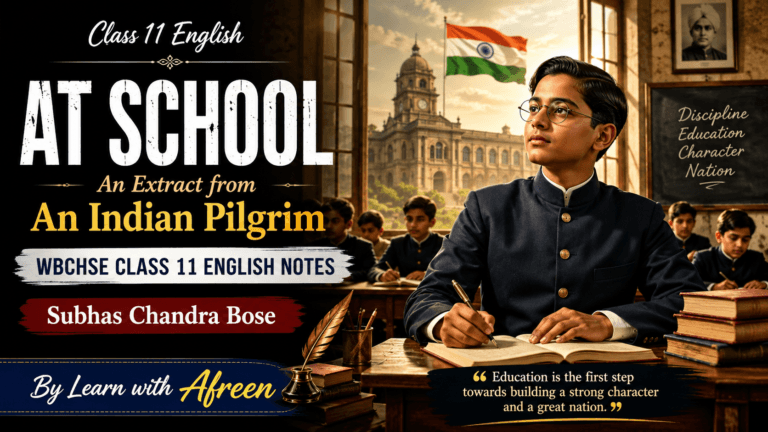

At School – Extract from An Indian Pilgrim (Autobiography of Subhas Chandra Bose)
About the Author (English)
Subhas Chandra Bose (1897–1945)
Subhas Chandra Bose was one of the greatest freedom fighters in Indian history. He was born on 23 January 1897 in Cuttack, Odisha. His father, Janakinath Bose, was a well-known lawyer, and his mother, Prabhavati Devi, was a caring and religious woman. Bose was a brilliant student from childhood and completed his education at Ravenshaw Collegiate School, Presidency College, Scottish Church College, and later at the University of Cambridge in England.
He successfully passed the prestigious Indian Civil Service (ICS) examination but resigned before joining because he wanted to dedicate his life to India’s freedom struggle. His love for the nation inspired millions of Indians.
Subhas Chandra Bose became the President of the Indian National Congress, but later formed the Forward Bloc due to ideological differences. During the Second World War, he organized the Indian National Army (INA) to fight against British rule. His famous slogan, “Give me blood, and I will give you freedom,” became a symbol of patriotism.
Bose also wrote An Indian Pilgrim, an autobiographical work in which he honestly described his childhood, education, personal experiences, and the ideas that shaped his character. Although the autobiography remained unfinished, it is considered an important historical and literary work because it gives readers a clear picture of his early life and personality.
Word Count: ~270
लेखक परिचय (Hindi)
सुभाष चन्द्र बोस (1897–1945)
सुभाष चन्द्र बोस भारत के महानतम स्वतंत्रता सेनानियों में से एक थे। उनका जन्म 23 जनवरी 1897 को ओडिशा के कटक में हुआ। उनके पिता जानकीनाथ बोस एक प्रसिद्ध वकील थे, जबकि उनकी माता प्रभावती देवी धार्मिक और संस्कारी महिला थीं। बचपन से ही सुभाष अत्यंत बुद्धिमान, अनुशासित और अध्ययनशील थे।
उन्होंने अपनी प्रारम्भिक शिक्षा रैवेन्शॉ कॉलेजिएट स्कूल में प्राप्त की। इसके बाद उन्होंने प्रेसिडेंसी कॉलेज, स्कॉटिश चर्च कॉलेज तथा इंग्लैंड के कैम्ब्रिज विश्वविद्यालय में अध्ययन किया। उन्होंने भारतीय सिविल सेवा (ICS) की कठिन परीक्षा भी उत्तीर्ण की, लेकिन देश की स्वतंत्रता के लिए नौकरी छोड़ दी।
सुभाष चन्द्र बोस भारतीय राष्ट्रीय कांग्रेस के अध्यक्ष भी बने। बाद में उन्होंने फ़ॉरवर्ड ब्लॉक की स्थापना की। द्वितीय विश्वयुद्ध के दौरान उन्होंने आज़ाद हिन्द फ़ौज (INA) का नेतृत्व किया और भारत की स्वतंत्रता के लिए संघर्ष किया। उनका प्रसिद्ध नारा “तुम मुझे खून दो, मैं तुम्हें आज़ादी दूँगा” आज भी देशभक्ति का प्रतीक माना जाता है।
उन्होंने An Indian Pilgrim नामक आत्मकथा लिखी, जिसमें अपने बचपन, शिक्षा, परिवार, विद्यालय जीवन तथा व्यक्तित्व निर्माण से जुड़ी घटनाओं का सरल और ईमानदार वर्णन किया है। यह पुस्तक अधूरी होने के बावजूद उनके जीवन और विचारों को समझने का एक महत्त्वपूर्ण स्रोत है।
About the Chapter (English)
About the Chapter – At School
At School is an extract from An Indian Pilgrim, the autobiography of Subhas Chandra Bose. In this chapter, Bose recalls his early school life and the experiences that influenced his thinking and personality.
The chapter describes how he studied in different schools and gradually became more disciplined, thoughtful, and responsible. He explains the importance of good teachers, moral education, and self-discipline. Bose also reflects on the influence of his family and school environment in shaping his values.
The chapter highlights the educational system of that period and shows how young Subhas developed qualities such as honesty, determination, patriotism, and respect for others. His school experiences prepared him for greater responsibilities in life.
Rather than focusing only on academic success, the chapter emphasizes character building, self-improvement, and service to society. It encourages students to develop strong moral values along with knowledge.
This extract is inspiring because it shows that great leaders are shaped by discipline, education, and noble ideals from an early age.
अध्याय परिचय (Hindi)
अध्याय परिचय – At School
At School सुभाष चन्द्र बोस की आत्मकथा An Indian Pilgrim का एक अंश है। इस अध्याय में उन्होंने अपने विद्यालय जीवन की यादों और अनुभवों का वर्णन किया है।
लेखक बताते हैं कि विद्यालय ने उनके व्यक्तित्व के निर्माण में महत्वपूर्ण भूमिका निभाई। उन्होंने अच्छे शिक्षकों, अनुशासन, नैतिक शिक्षा और आत्मसंयम के महत्व को समझा। विद्यालय का वातावरण तथा परिवार से मिले संस्कारों ने उन्हें एक जिम्मेदार और संवेदनशील व्यक्ति बनाया।
इस अध्याय में केवल पढ़ाई की बात नहीं की गई है, बल्कि अच्छे चरित्र, ईमानदारी, आत्मविश्वास, मेहनत और समाज के प्रति जिम्मेदारी जैसे गुणों पर भी बल दिया गया है। सुभाष चन्द्र बोस बताते हैं कि विद्यार्थी जीवन में सीखे गए संस्कार आगे चलकर जीवन की दिशा तय करते हैं।
यह अध्याय विद्यार्थियों को प्रेरित करता है कि वे केवल परीक्षा में अच्छे अंक लाने तक सीमित न रहें, बल्कि अच्छे इंसान बनने का भी प्रयास करें।
Original Summary (English)
Summary
At School describes the early school experiences of Subhas Chandra Bose. As a young student, he was curious, disciplined, and eager to learn. His school became an important place where he developed his character and values.
Bose remembers his teachers with respect because they encouraged discipline, honesty, and hard work. He gradually learned to think independently and became more aware of the importance of education in life. His family also played a significant role by encouraging good habits and moral values.
The chapter explains that education is not only about gaining knowledge but also about becoming a responsible citizen. Bose learned the importance of self-control, respect for elders, kindness towards others, and dedication to duty.
His school experiences helped him become confident and determined. These qualities later guided him in his struggle for India’s freedom.
The chapter teaches that true education develops both the mind and character. It inspires students to remain disciplined, honest, and hardworking in every stage of life.
मौलिक सारांश (Hindi)
सारांश
At School अध्याय में सुभाष चन्द्र बोस अपने विद्यालय जीवन की महत्वपूर्ण स्मृतियों को साझा करते हैं। वे बताते हैं कि बचपन से ही उन्हें पढ़ने-लिखने में रुचि थी और विद्यालय ने उनके व्यक्तित्व के विकास में बड़ी भूमिका निभाई।
विद्यालय में उन्हें ऐसे शिक्षक मिले जिन्होंने केवल पढ़ाई ही नहीं, बल्कि अनुशासन, ईमानदारी, मेहनत और अच्छे आचरण का महत्व भी सिखाया। उनके परिवार ने भी उनमें नैतिक मूल्यों और संस्कारों का विकास किया। इन दोनों का संयुक्त प्रभाव उनके व्यक्तित्व को मजबूत बनाता गया।
लेखक समझते हैं कि शिक्षा का उद्देश्य केवल परीक्षा में सफल होना नहीं है। सच्ची शिक्षा मनुष्य को जिम्मेदार, आत्मविश्वासी और चरित्रवान बनाती है। विद्यालय में सीखी गई आदतों ने उन्हें जीवन की कठिन परिस्थितियों का सामना करने के योग्य बनाया।
यह अध्याय विद्यार्थियों को प्रेरित करता है कि वे समय का सदुपयोग करें, शिक्षकों का सम्मान करें, अनुशासन का पालन करें और सदैव सत्य तथा ईमानदारी के मार्ग पर चलें। लेखक का मानना है कि अच्छे संस्कार और गुणवत्तापूर्ण शिक्षा ही भविष्य में एक महान व्यक्तित्व का निर्माण करती है।
50 Important MCQs with Answers
At School – Extract from An Indian Pilgrim
WBCHSE Class 11 | Board Exam Friendly
1. At School is an extract from which book?
A. My Experiments with Truth
B. An Indian Pilgrim
C. The Discovery of India
D. Wings of Fire
Answer: ✅ B. An Indian Pilgrim
2. Who is the author of At School?
A. Rabindranath Tagore
B. Lal Behari Dey
C. Subhas Chandra Bose
D. Bankim Chandra Chattopadhyay
Answer: ✅ C. Subhas Chandra Bose
3. An Indian Pilgrim is a/an—
A. Novel
B. Drama
C. Autobiography
D. Essay
Answer: ✅ C. Autobiography
4. Where was Subhas Chandra Bose born?
A. Kolkata
B. Delhi
C. Cuttack
D. Patna
Answer: ✅ C. Cuttack
5. In which year was Subhas Chandra Bose born?
A. 1895
B. 1896
C. 1897
D. 1898
Answer: ✅ C. 1897
6. What contributed most to the author’s personality development?
A. Sports
B. School and family
C. Business
D. Politics
Answer: ✅ B. School and family
7. What is the main theme of the chapter?
A. War
B. School life
C. Business
D. Science
Answer: ✅ B. School life
8. Which quality was the author known for at school?
A. Laziness
B. Discipline
C. Mischief
D. Arrogance
Answer: ✅ B. Discipline
9. According to the author, education is closely related to—
A. Wealth
B. Character building
C. Entertainment
D. Employment
Answer: ✅ B. Character building
10. According to the author, good teachers develop—
A. High marks only
B. Discipline and moral values
C. Sporting skills
D. Business skills
Answer: ✅ B. Discipline and moral values
11. Which quality did the author develop during his school life?
A. Selfishness
B. Self-confidence
C. Anger
D. Jealousy
Answer: ✅ B. Self-confidence
12. What does the author emphasize most?
A. Earning money
B. Good character
C. Fame
D. Competition
Answer: ✅ B. Good character
13. Whom does the author teach us to respect?
A. Friends only
B. Teachers and elders
C. Family members only
D. No one
Answer: ✅ B. Teachers and elders
14. According to the author, true education means—
A. Passing examinations
B. Developing both knowledge and character
C. Getting a job
D. Earning money
Answer: ✅ B. Developing both knowledge and character
15. School life made the author—
A. Weak
B. Responsible
C. Lazy
D. Selfish
Answer: ✅ B. Responsible
16. What kind of student was the author in his childhood?
A. Disciplined
B. Lazy
C. Careless
D. Disobedient
Answer: ✅ A. Disciplined
17. The chapter inspires students to—
A. Be disciplined
B. Be honest
C. Work hard
D. All of the above
Answer: ✅ D. All of the above
18. What effect did the school environment have on the author?
A. Negative
B. Positive
C. No effect
D. Temporary
Answer: ✅ B. Positive
19. Which quality does the author consider the key to success?
A. Discipline
B. Luck
C. Wealth
D. Power
Answer: ✅ A. Discipline
20. According to the author, what should students do?
A. Make proper use of time
B. Waste time
C. Tell lies
D. Quarrel with others
Answer: ✅ A. Make proper use of time
21. Subhas Chandra Bose later became famous as a—
A. Scientist
B. Freedom fighter
C. Poet
D. Businessman
Answer: ✅ B. Freedom fighter
22. What did the author learn at school?
A. Bookish knowledge only
B. Moral values
C. Business
D. Politics
Answer: ✅ B. Moral values
23. From which point of view is the chapter written?
A. Autobiographical
B. Fictional
C. Scientific
D. Humorous
Answer: ✅ A. Autobiographical
24. What type of education does the author support?
A. Moral education
B. Technical education only
C. Vocational education only
D. Sports education only
Answer: ✅ A. Moral education
25. According to the author, a good student is—
A. Honest
B. Disciplined
C. Hardworking
D. All of the above
Answer: ✅ D. All of the above
26. What was the author’s attitude towards his teachers?
A. Respect
B. Fear
C. Hatred
D. Indifference
Answer: ✅ A. Respect
27. What kind of life does the author prefer?
A. Disciplined life
B. Disorderly life
C. Luxurious life
D. Lazy life
Answer: ✅ A. Disciplined life
28. What is the main purpose of education?
A. Character building
B. Getting a job
C. Scoring high marks
D. Entertainment
Answer: ✅ A. Character building
29. What did school life teach the author?
A. Self-control
B. Jealousy
C. Laziness
D. Pride
Answer: ✅ A. Self-control
30. Which values does the author consider important?
A. Truthfulness
B. Honesty
C. Discipline
D. All of the above
Answer: ✅ D. All of the above
31. What is the name of the author’s autobiography?
Answer: ✅ An Indian Pilgrim
32. Which country did the author belong to?
Answer: ✅ India
33. What was the author’s aim in life during his school days?
Answer: ✅ To build a strong and noble character.
34. What is the greatest importance of school?
Answer: ✅ Personality development.
35. What kind of teachers did the author admire?
Answer: ✅ Inspiring and dedicated teachers.
36. Which quality did the author consider the most important?
Answer: ✅ Discipline.
37. What should accompany education?
Answer: ✅ Moral values.
38. Whom does the author respect the most?
Answer: ✅ Teachers and parents.
39. Whom does this chapter inspire?
Answer: ✅ Students.
40. What is the greatest benefit of school life?
Answer: ✅ Personality development.
41. How does the author describe honesty?
Answer: ✅ As one of the finest human qualities.
42. What kind of student should one be?
Answer: ✅ Hardworking and sincere.
43. What kind of society does the author dream of?
Answer: ✅ A moral and disciplined society.
44. What is the foundation of a good student?
Answer: ✅ Discipline.
45. What was the contribution of the author’s family?
Answer: ✅ They instilled good values and moral principles.
46. What does the author consider the basis of success?
Answer: ✅ Hard work.
47. What is the central message of the chapter?
Answer: ✅ Education should develop both character and personality.
48. Which feeling inspired the author throughout his life?
Answer: ✅ Patriotism.
49. For which class is this chapter especially important?
Answer: ✅ WBCHSE Class 11.
50. What is the greatest lesson of At School?
Answer: ✅ True education is not limited to gaining knowledge; it develops good character, discipline, honesty, responsibility, and moral values.
25 Important Short Questions with Answers (WBCHSE Class 11)
1. Who is the writer of At School?
Answer: The writer of At School is Subhas Chandra Bose.
2. From which book is At School taken?
Answer: It is taken from An Indian Pilgrim, the autobiography of Subhas Chandra Bose.
3. What kind of book is An Indian Pilgrim?
Answer: It is an autobiography.
4. What is the main theme of the chapter?
Answer: The chapter describes the author’s early school life and the experiences that helped shape his character.
5. What qualities did Bose develop at school?
Answer: He developed discipline, honesty, confidence, responsibility, and respect for others.
6. Why was school important in Bose’s life?
Answer: School helped him build his character and moral values.
7. What role did teachers play in his life?
Answer: His teachers inspired him to become disciplined, honest, and hardworking.
8. What does Bose say about education?
Answer: He believed that education should develop both knowledge and character.
9. Which values does the chapter emphasize?
Answer: Discipline, truthfulness, hard work, self-control, and respect.
10. Why is this chapter inspirational?
Answer: It shows how good education and strong values can shape a great leader.
11. What does the author say about discipline?
Answer: Discipline is essential for success in life.
12. How did family influence Bose?
Answer: His family taught him moral values and good habits.
13. Was Bose interested in studies?
Answer: Yes, he was sincere and hardworking.
14. What is the message of the chapter?
Answer: True education builds character as well as knowledge.
15. What kind of student was Bose?
Answer: He was disciplined, curious, and responsible.
16. Why should students respect teachers?
Answer: Teachers guide students and help build their future.
17. What is more important than marks according to the chapter?
Answer: Good character and moral values.
18. What does the chapter teach students?
Answer: It teaches honesty, discipline, hard work, and responsibility.
19. Why is moral education necessary?
Answer: It helps students become good human beings.
20. What should students learn besides textbooks?
Answer: They should learn discipline, kindness, and responsibility.
21. What is the importance of self-discipline?
Answer: It helps students achieve success and confidence.
22. How does the chapter help modern students?
Answer: It encourages them to become responsible and hardworking.
23. What is the author’s opinion about hard work?
Answer: Hard work is essential for success.
24. What makes a student successful?
Answer: Discipline, honesty, and regular study.
25. What is the central idea of At School?
Answer: School education plays a vital role in shaping a person’s character and future.