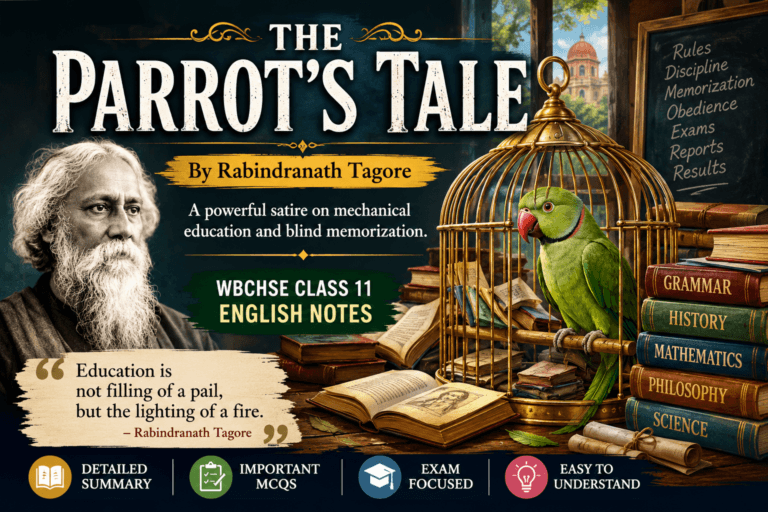

The Parrot’s Tale
By Rabindranath Tagore
About the Author (English)
Rabindranath Tagore (1861–1941)
Rabindranath Tagore was one of India’s greatest poets, writers, philosophers, educators, and social reformers. He was born on 7 May 1861 in Kolkata, West Bengal, into the famous Tagore family. From an early age, he showed exceptional talent in literature, music, and art. Unlike many writers of his time, Tagore believed that education should encourage creativity, freedom, and independent thinking instead of blind memorization.
Tagore wrote poems, short stories, novels, essays, plays, and songs in Bengali and English. His literary works are admired for their simplicity, deep human values, and universal appeal. In 1913, he became the first Asian Nobel Prize winner in Literature for his English translation of Gitanjali (Song Offerings). This achievement made him internationally famous.
He founded Visva-Bharati University at Santiniketan, where he introduced a unique education system based on learning in harmony with nature. He strongly opposed rigid and mechanical methods of teaching.
Among his famous works are Gitanjali, Kabuliwala, The Post Office, The Home and the World, The Parrot’s Tale, and many other masterpieces. Through his writings, Tagore emphasized freedom, humanity, compassion, and the importance of imagination.
The Parrot’s Tale is one of his best-known satirical stories. It criticizes an education system that values memorization over understanding. The story reminds readers that true education should develop intelligence, creativity, and freedom rather than suppress them.
Word Count: ~275
लेखक परिचय (Hindi)
रवीन्द्रनाथ ठाकुर (1861–1941)
रवीन्द्रनाथ ठाकुर भारत के महान कवि, लेखक, दार्शनिक, शिक्षाविद् और समाज सुधारक थे। उनका जन्म 7 मई 1861 को कोलकाता, पश्चिम बंगाल में प्रसिद्ध ठाकुर परिवार में हुआ था। बचपन से ही उनमें साहित्य, संगीत और कला के प्रति गहरी रुचि थी। वे मानते थे कि शिक्षा का उद्देश्य केवल पुस्तकीय ज्ञान देना नहीं, बल्कि विद्यार्थियों की सोच, कल्पनाशक्ति और व्यक्तित्व का विकास करना होना चाहिए।
रवीन्द्रनाथ ठाकुर ने कविता, कहानी, उपन्यास, नाटक, निबंध और गीत जैसी अनेक विधाओं में लेखन किया। उनकी रचनाओं में मानवता, प्रेम, प्रकृति और स्वतंत्र विचारों का सुंदर समन्वय मिलता है। वर्ष 1913 में उन्हें उनकी प्रसिद्ध कृति गीतांजलि (Gitanjali) के लिए साहित्य का नोबेल पुरस्कार मिला। वे साहित्य के क्षेत्र में नोबेल पुरस्कार प्राप्त करने वाले पहले एशियाई बने।
उन्होंने शांतिनिकेतन में विश्व-भारती विश्वविद्यालय की स्थापना की, जहाँ उन्होंने प्रकृति के बीच स्वतंत्र एवं रचनात्मक शिक्षा का आदर्श प्रस्तुत किया। वे रटने वाली शिक्षा के विरोधी थे और विद्यार्थियों में स्वतंत्र चिंतन तथा सृजनात्मकता विकसित करने पर बल देते थे।
उनकी प्रसिद्ध रचनाओं में गीतांजलि, काबुलीवाला, डाकघर, घरे-बाइरे और The Parrot’s Tale शामिल हैं। The Parrot’s Tale के माध्यम से उन्होंने ऐसी शिक्षा व्यवस्था की आलोचना की है जो ज्ञान के बजाय केवल रटने पर आधारित होती है।
About the Chapter (English)
About the Chapter
The Parrot’s Tale is a famous satirical short story by Rabindranath Tagore. The story presents a sharp criticism of a mechanical education system that values memorization more than understanding. Through the symbolic character of a parrot, Tagore shows how excessive rules, meaningless learning, and blind obedience can destroy intelligence and creativity.
In the story, a king wants his parrot to become educated. Instead of allowing the bird to learn naturally, scholars and officials create an elaborate system of education. They fill the bird’s cage with books, appoint many teachers, and spend huge amounts of money. However, no one thinks about the bird’s happiness or real learning.
As the process continues, the parrot loses its freedom, joy, and finally its life. Ironically, the authorities declare the educational experiment successful because all the formal procedures have been completed.
The story is a powerful satire on traditional education that focuses only on external appearances and ignores true knowledge. Tagore reminds readers that education should encourage curiosity, creativity, and independent thinking rather than blind memorization.
अध्याय परिचय (Hindi)
अध्याय परिचय
The Parrot’s Tale रवीन्द्रनाथ ठाकुर की एक प्रसिद्ध व्यंग्यात्मक कहानी है। इस कहानी में लेखक ने ऐसी शिक्षा व्यवस्था की आलोचना की है जो समझ और रचनात्मकता की बजाय केवल रटने पर आधारित होती है।
कहानी में एक राजा अपने तोते को शिक्षित बनाना चाहता है। विद्वान और अधिकारी तोते को स्वतंत्र रूप से सीखने का अवसर देने के बजाय उसके लिए एक बड़ा पिंजरा बनवाते हैं, अनेक शिक्षक नियुक्त करते हैं और ढेर सारी पुस्तकें इकट्ठी करते हैं। शिक्षा के नाम पर बहुत धन और समय खर्च किया जाता है, लेकिन किसी का ध्यान तोते की खुशी, उसकी स्वतंत्रता या उसके वास्तविक ज्ञान पर नहीं जाता।
धीरे-धीरे तोता अपनी स्वाभाविक जीवनशैली खो देता है। अंत में उसकी मृत्यु हो जाती है, फिर भी अधिकारी अपनी योजना को सफल घोषित कर देते हैं क्योंकि सभी औपचारिक कार्य पूरे कर दिए गए थे।
यह कहानी शिक्षा व्यवस्था की कमियों पर तीखा व्यंग्य करती है और यह संदेश देती है कि वास्तविक शिक्षा वही है जो व्यक्ति की जिज्ञासा, स्वतंत्र सोच, कल्पनाशक्ति और व्यक्तित्व का विकास करे।
Original Summary (English)
Summary
The Parrot’s Tale is an allegorical and satirical story about a king who wishes to educate his favourite parrot. The king believes that education will improve the bird, so he orders his ministers and scholars to make proper arrangements.
Instead of understanding the bird’s natural needs, the scholars design a complicated educational system. They first replace the simple cage with a magnificent golden one. Many workers are employed to build and decorate it. Teachers, priests, book collectors, and supervisors are appointed. Huge sums of money are spent on books and official arrangements.
The bird is expected to become educated by being surrounded with books rather than by understanding them. Pages from books are pushed into the bird’s cage as if knowledge can simply be forced into someone. Nobody notices that the parrot is no longer singing, flying, or enjoying life. The officials remain busy preparing reports and praising one another.
Whenever someone questions the usefulness of the system, the authorities silence all criticism. Their main concern is to satisfy the king rather than to provide real education.
Eventually, the parrot dies because of neglect and the unnatural method of education. However, when the king inspects the bird, the officials proudly declare that the educational programme has been completed successfully. The king hears only the rustling of the book pages inside the bird and believes everything is perfect.
Through this ironic ending, Tagore exposes the failure of an education system that values rules, appearances, and memorization instead of understanding, creativity, and freedom. The story teaches that education should nurture life, curiosity, imagination, and independent thinking.
मौलिक सारांश (Hindi)
सारांश
The Parrot’s Tale एक प्रतीकात्मक और व्यंग्यात्मक कहानी है जिसमें एक राजा अपने प्रिय तोते को शिक्षित बनाना चाहता है। वह सोचता है कि शिक्षा से तोता अधिक योग्य और बुद्धिमान बन जाएगा। इसलिए वह अपने मंत्रियों और विद्वानों को उचित व्यवस्था करने का आदेश देता है।
विद्वान तोते की स्वाभाविक आवश्यकताओं को समझने के बजाय एक जटिल शिक्षा व्यवस्था तैयार करते हैं। सबसे पहले उसके साधारण पिंजरे की जगह एक सुंदर और महँगा सुनहरा पिंजरा बनाया जाता है। अनेक कर्मचारियों, शिक्षकों और अधिकारियों की नियुक्ति की जाती है। बड़ी संख्या में पुस्तकें एकत्र की जाती हैं और शिक्षा के नाम पर बहुत धन खर्च किया जाता है।
लेकिन किसी को इस बात की चिंता नहीं होती कि तोता वास्तव में कुछ सीख रहा है या नहीं। उसके सामने केवल पुस्तकों का ढेर लगा दिया जाता है। ऐसा व्यवहार किया जाता है मानो केवल किताबों से घिर जाने से ही ज्ञान प्राप्त हो जाएगा। धीरे-धीरे तोता गाना, उड़ना और प्रसन्न रहना छोड़ देता है। उसकी स्वतंत्रता समाप्त हो जाती है।
जो लोग इस व्यवस्था पर प्रश्न उठाते हैं, उन्हें अनदेखा कर दिया जाता है। सभी अधिकारी केवल राजा को खुश करने और अपनी सफलता दिखाने में लगे रहते हैं। अंततः उपेक्षा और कृत्रिम शिक्षा के कारण तोते की मृत्यु हो जाती है। फिर भी अधिकारी घोषणा करते हैं कि शिक्षा का कार्य पूरी तरह सफल रहा।
इस व्यंग्यपूर्ण अंत के माध्यम से रवीन्द्रनाथ ठाकुर यह संदेश देते हैं कि सच्ची शिक्षा रटने, दिखावे और कठोर नियमों से नहीं, बल्कि स्वतंत्र विचार, जिज्ञासा, रचनात्मकता और जीवन के विकास से प्राप्त होती है। यही इस कहानी का मुख्य संदेश है।
The Parrot’s Tale
50 Important MCQs with Answers
Class 11 | Board Exam Friendly
1. Who is the author of The Parrot’s Tale?
A. Bankim Chandra Chattopadhyay
B. Rabindranath Tagore
C. Sarat Chandra Chattopadhyay
D. R. K. Narayan
Answer: ✅ B. Rabindranath Tagore
2. The Parrot’s Tale is a—
A. Novel
B. Short Story
C. Satirical Story
D. Drama
Answer: ✅ C. Satirical Story
3. The main character of the story is—
A. A King
B. A Scholar
C. A Parrot
D. A Minister
Answer: ✅ C. A Parrot
4. Who wanted the parrot to be educated?
A. The Minister
B. The King
C. The Teacher
D. The Queen
Answer: ✅ B. The King
5. What was built for the parrot?
A. A Nest
B. A Golden Cage
C. A Wooden House
D. A Garden
Answer: ✅ B. A Golden Cage
6. Why was the golden cage built?
A. To decorate the palace
B. To keep the parrot safe while educating it
C. To entertain the king
D. To punish the parrot
Answer: ✅ B. To keep the parrot safe while educating it
7. Who were appointed to educate the parrot?
A. Soldiers
B. Scholars and teachers
C. Farmers
D. Merchants
Answer: ✅ B. Scholars and teachers
8. What was filled into the cage?
A. Fruits
B. Books
C. Toys
D. Clothes
Answer: ✅ B. Books
9. What happened to the parrot’s freedom?
A. It increased.
B. It remained unchanged.
C. It was taken away.
D. It became stronger.
Answer: ✅ C. It was taken away.
10. The story mainly criticizes—
A. Modern science
B. Mechanical education
C. Agriculture
D. Politics
Answer: ✅ B. Mechanical education
11. What did the scholars value more than real learning?
A. Games
B. Rules and formalities
C. Nature
D. Music
Answer: ✅ B. Rules and formalities
12. What happened to the parrot at the end?
A. It escaped.
B. It became wise.
C. It died.
D. It flew away.
Answer: ✅ C. It died.
13. Despite the parrot’s death, what did the officials claim?
A. The experiment had failed.
B. The education was successful.
C. The cage was broken.
D. The king was angry.
Answer: ✅ B. The education was successful.
14. The story is an example of—
A. Comedy
B. Tragedy only
C. Satire
D. Romance
Answer: ✅ C. Satire
15. What does the parrot symbolize?
A. A king
B. A student
C. A teacher
D. A soldier
Answer: ✅ B. A student
16. What do the books symbolize?
A. Real knowledge
B. Forced learning without understanding
C. Entertainment
D. Wealth
Answer: ✅ B. Forced learning without understanding
17. What is the main message of the story?
A. Wealth is important.
B. True education develops understanding and freedom.
C. Kings are always wise.
D. Birds should live in cages.
Answer: ✅ B. True education develops understanding and freedom.
18. Which quality is ignored in the education system shown in the story?
A. Creativity
B. Wealth
C. Fame
D. Power
Answer: ✅ A. Creativity
19. The king wanted the parrot to become—
A. Rich
B. Educated
C. Strong
D. Famous
Answer: ✅ B. Educated
20. What happened to the parrot’s natural happiness?
A. It increased.
B. It disappeared.
C. It remained the same.
D. It improved.
Answer: ✅ B. It disappeared.
21. What literary device is mainly used in the story?
A. Allegory and Satire
B. Romance
C. Fantasy
D. Horror
Answer: ✅ A. Allegory and Satire
22. What does the golden cage represent?
A. Freedom
B. Luxury without real education
C. Nature
D. Success
Answer: ✅ B. Luxury without real education
23. Who benefited from the educational project?
A. The parrot
B. The scholars and officials
C. The students
D. Nobody
Answer: ✅ B. The scholars and officials
24. What happened to the bird’s voice?
A. It became sweeter.
B. It disappeared.
C. It became louder.
D. It remained unchanged.
Answer: ✅ B. It disappeared.
25. Which emotion does the ending create?
A. Joy
B. Irony
C. Excitement
D. Romance
Answer: ✅ B. Irony
26. The story teaches that education should encourage—
A. Fear
B. Memorization only
C. Independent thinking
D. Blind obedience
Answer: ✅ C. Independent thinking
27. What did the officials care about most?
A. The parrot’s happiness
B. Reports and formal success
C. Nature
D. Music
Answer: ✅ B. Reports and formal success
28. Which of the following is a theme of the story?
A. Freedom in education
B. War
C. Trade
D. Adventure
Answer: ✅ A. Freedom in education
29. What did Tagore oppose through this story?
A. Creative learning
B. Rote learning
C. Outdoor education
D. Reading books
Answer: ✅ B. Rote learning
30. The story ends with—
A. The parrot becoming intelligent
B. The parrot flying away
C. The death of the parrot
D. The king closing the school
Answer: ✅ C. The death of the parrot
One-Mark Important Questions
31. Who wrote The Parrot’s Tale?
Answer: ✅ Rabindranath Tagore.
32. What is the genre of the story?
Answer: ✅ Satirical short story.
33. Who ordered the parrot’s education?
Answer: ✅ The King.
34. What was built for the parrot?
Answer: ✅ A golden cage.
35. Who managed the education?
Answer: ✅ Scholars and officials.
36. What filled the cage?
Answer: ✅ Books.
37. What happened to the parrot?
Answer: ✅ It died.
38. What does the parrot symbolize?
Answer: ✅ An innocent learner or student.
39. What does the cage symbolize?
Answer: ✅ Restrictive and mechanical education.
40. What does the story criticize?
Answer: ✅ Rote learning and meaningless education.
41. What is the central idea of the story?
Answer: ✅ Education should promote understanding and freedom.
42. Which quality is essential for true education?
Answer: ✅ Creativity.
43. What did the officials ignore?
Answer: ✅ The parrot’s well-being.
44. Why is the story called a satire?
Answer: ✅ Because it mocks the faults of the education system.
45. Who founded Visva-Bharati University?
Answer: ✅ Rabindranath Tagore.
46. Which Nobel Prize did Tagore receive?
Answer: ✅ Nobel Prize in Literature (1913).
47. What does the story emphasize?
Answer: ✅ Meaningful and humane education.
48. Which method of education does Tagore support?
Answer: ✅ Creative, practical, and child-centered learning.
49. For which board is this chapter important?
Answer: ✅ WBCHSE Class 11.
50. What is the greatest lesson of The Parrot’s Tale?
Answer: ✅ True education develops knowledge, creativity, freedom, and character—not blind memorization or empty formalities.