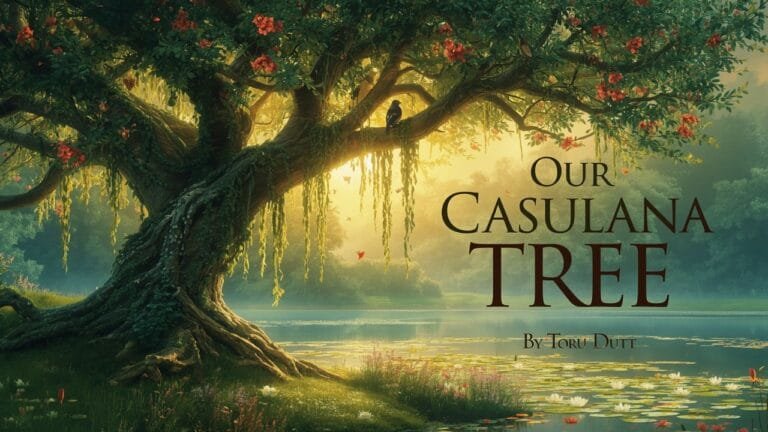

Our Casuarina Tree
About the Poet (English)
Toru Dutt (1856–1877) was one of the first Indian poets to achieve international recognition in English literature. She was born on 4 March 1856 in Calcutta (now Kolkata), Bengal, into a cultured and educated Christian family. Her father, Govin Chunder Dutt, encouraged her literary interests from an early age.
Toru Dutt was an exceptionally gifted scholar. She was fluent in English, French, Bengali, and Sanskrit. During her short life, she travelled to France and England, where she studied European literature and culture. Her poetry beautifully combines Indian traditions with Western literary styles, making her one of the pioneers of Indo-Anglian literature.
Despite suffering from tuberculosis, Toru continued writing until her death at the age of 21 on 30 August 1877.
Some of her famous works include:
- Our Casuarina Tree
- Ancient Ballads and Legends of Hindustan
- A Sheaf Gleaned in French Fields
- Bianca, or The Young Spanish Maiden
Today, Toru Dutt is remembered as one of India’s greatest English poets whose works reflect love, memory, patriotism, nature, and human emotions.
कवयित्री परिचय (Hindi)
तोरू दत्त (1856–1877) भारतीय अंग्रेज़ी साहित्य की प्रथम महान कवयित्रियों में से एक थीं। उनका जन्म 4 मार्च 1856 को कलकत्ता (वर्तमान कोलकाता) में एक शिक्षित और समृद्ध ईसाई परिवार में हुआ था। उनके पिता गोविन चंद्र दत्त स्वयं साहित्य-प्रेमी थे और उन्होंने तोरू दत्त की शिक्षा तथा साहित्यिक प्रतिभा को प्रोत्साहित किया।
तोरू दत्त बचपन से ही अत्यंत प्रतिभाशाली थीं। उन्हें अंग्रेज़ी, फ्रेंच, संस्कृत और बंगाली भाषाओं का गहरा ज्ञान था। वे अपने परिवार के साथ फ्रांस और इंग्लैंड भी गईं, जहाँ उन्होंने यूरोपीय साहित्य का अध्ययन किया।
उन्होंने भारतीय संस्कृति और पश्चिमी साहित्य का सुंदर समन्वय अपनी रचनाओं में प्रस्तुत किया। दुर्भाग्यवश वे क्षय रोग (Tuberculosis) से पीड़ित हो गईं और केवल 21 वर्ष की आयु में 30 अगस्त 1877 को उनका निधन हो गया।
उनकी प्रमुख रचनाएँ हैं—
- Our Casuarina Tree
- Ancient Ballads and Legends of Hindustan
- A Sheaf Gleaned in French Fields
- Bianca
आज भी तोरू दत्त को भारतीय अंग्रेज़ी कविता की अग्रणी कवयित्री माना जाता है।
About the Poem (English)
“Our Casuarina Tree” is one of the most famous poems by Toru Dutt. It is a beautiful lyric that expresses the poet’s deep love for a Casuarina tree, which stood near her childhood home.
The tree is not merely a part of nature; it is a living symbol of childhood memories, love, friendship, and family affection. The poet spent many happy days playing under the tree with her beloved brother Abju and sister Aru, both of whom died at a young age.
As the poet grows older and travels to distant countries like France and Italy, the memory of the Casuarina tree continues to remain alive in her heart. Whenever she hears the sound of waves or the wind, she is reminded of the tree and her lost childhood.
The poem beautifully connects nature with human emotions. The Casuarina tree becomes a symbol of love, memory, immortality, nostalgia, and the everlasting bond between the living and the dead.
In the final stanza, the poet prays that her poem will make the tree immortal, protecting it from being forgotten by future generations.
Deep Chapter Summary (English)
Introduction
“Our Casuarina Tree” is a nostalgic and emotional poem in which Toru Dutt remembers her childhood through the image of a magnificent Casuarina tree. Although the poem begins with a vivid description of nature, it gradually becomes a deeply personal meditation on love, memory, death, and immortality.
The Beauty of the Casuarina Tree
The poem opens with a magnificent description of the Casuarina tree.
A huge creeper winds around the tree like a giant python, embracing its rough trunk covered with deep scars. Despite this heavy creeper, the mighty tree stands proudly and gracefully.
Its branches are decorated with beautiful crimson flowers where birds and bees gather throughout the day. During the night, the tree seems to sing a mysterious, never-ending song, filling the entire garden with sweetness.
The poet presents the tree as a symbol of strength, endurance, and natural beauty.
Morning Scene Around the Tree
Every morning, as the poet opens her bedroom window, the first thing she sees is the Casuarina tree.
She lovingly observes:
- A grey baboon sitting quietly on the top branch.
- Young monkeys playing joyfully.
- Kokila birds singing to welcome the sunrise.
- Sleepy cows walking towards the fields.
- White water lilies floating in the pond beneath the tree.
These beautiful natural images create a peaceful and lively atmosphere.
The Tree as a Symbol of Childhood Memories
The poet explains that she loves the tree not only because it is beautiful, but because it is deeply connected with her childhood.
She, her brother Abju, and her sister Aru spent countless happy hours playing beneath its shade.
Although many years have passed and her beloved siblings are no longer alive, the tree keeps their memories alive forever.
For the poet, the tree becomes a living monument of love and remembrance.
The Tree’s Voice and the Poet’s Emotions
Sometimes the poet hears the soft rustling sound of the leaves.
To her, it sounds like a sad funeral song (dirge).
This mournful music reminds her of her departed brother and sister.
Even while travelling abroad, she continues hearing this imaginary music, proving that true memories remain alive wherever we go.
Memories in Foreign Lands
While staying in countries like France and Italy, the poet often hears the sound of sea waves.
These sounds immediately remind her of the Casuarina tree standing proudly in her homeland.
The tree becomes a powerful symbol of her emotional connection to India and her childhood.
The Desire for Immortality
In the final stanza, the poet expresses her heartfelt wish to make the tree immortal through her poetry.
She knows that one day she herself will die, but she hopes that her poem will ensure that the tree—and the precious memories associated with it—will never be forgotten.
She prays that Love itself will protect the tree from the curse of oblivion (forgetfulness).
Central Message
The poem teaches that:
- Nature preserves human memories.
- True love never dies.
- Childhood memories remain with us forever.
- Poetry can give immortality to people, places, and memories.
- Love is stronger than death and time.
Our Casuarina Tree – Part 2
Deep Summary in Hindi (विस्तृत सारांश)
“Our Casuarina Tree” प्रसिद्ध भारतीय कवयित्री टोरू दत्त (Toru Dutt) की अत्यंत भावपूर्ण कविता है। यह कविता केवल एक वृक्ष का वर्णन नहीं करती, बल्कि बचपन की मधुर स्मृतियों, भाई-बहनों के प्रति प्रेम, प्रकृति के सौंदर्य और अमरता की भावना को व्यक्त करती है। कवयित्री के लिए कैजुअरीना (Casuarina) का वृक्ष केवल एक पेड़ नहीं, बल्कि उनके जीवन की अनमोल यादों और दिवंगत भाई-बहनों का प्रतीक है।
प्रथम स्तम्भ (Stanza 1) – वृक्ष का भव्य स्वरूप
कविता की शुरुआत में कवयित्री कैजुअरीना वृक्ष का अत्यंत सुंदर और जीवंत चित्र प्रस्तुत करती हैं।
वह कहती हैं कि इस विशाल वृक्ष के चारों ओर एक लता (Creeper) ऐसे लिपटी हुई है जैसे कोई विशाल अजगर (Python) अपने शिकार को लपेट लेता है। वृक्ष का तना बहुत मोटा, मजबूत और पुराने घावों के निशानों से भरा हुआ है, जो उसके लंबे जीवन का प्रमाण हैं।
इस लता के कारण वृक्ष और भी सुंदर दिखाई देता है। उसकी शाखाओं पर लाल-लाल फूलों के गुच्छे खिले रहते हैं। पूरे दिन पक्षी और मधुमक्खियाँ इन फूलों के आसपास मंडराती रहती हैं।
रात के समय पूरा बगीचा किसी अज्ञात पक्षी के मधुर गीत से गूंज उठता है। ऐसा लगता है मानो स्वयं प्रकृति संगीत गा रही हो।
इस स्तम्भ का मुख्य भाव
- वृक्ष की विशालता
- प्रकृति का सौंदर्य
- जीव-जंतुओं का आश्रय
- वृक्ष का जीवनदायी स्वरूप
द्वितीय स्तम्भ (Stanza 2) – प्रकृति का सुबह का दृश्य
दूसरे स्तम्भ में कवयित्री सुबह का मनोहारी दृश्य प्रस्तुत करती हैं।
जब सुबह उनकी खिड़की खुलती है तो सबसे पहले उनकी दृष्टि इसी वृक्ष पर पड़ती है।
सर्दियों की सुबह एक बड़ा बबून (Baboon) वृक्ष की सबसे ऊँची शाखा पर मूर्ति की तरह शांत बैठा रहता है और सूर्योदय को देखता है।
नीचे उसकी छोटी संतानें खेलती रहती हैं।
चारों ओर कोयलें मधुर स्वर में गाना शुरू कर देती हैं।
गायें अपने चरागाह की ओर धीरे-धीरे बढ़ती हैं।
वृक्ष की विशाल छाया पास के तालाब पर पड़ती है जहाँ सफेद जलकुम्भियाँ बर्फ जैसी सुंदर दिखाई देती हैं।
पूरा वातावरण शांत, सुंदर और जीवन से भरपूर प्रतीत होता है।
इस स्तम्भ का मुख्य भाव
- प्रकृति का सुंदर चित्रण
- सुबह की शांति
- पशु-पक्षियों का जीवन
- वृक्ष का पर्यावरणीय महत्व
तृतीय स्तम्भ (Stanza 3) – बचपन की स्मृतियाँ
अब कविता का भाव पूरी तरह बदल जाता है।
कवयित्री कहती हैं कि उन्हें यह वृक्ष केवल इसलिए प्रिय नहीं है क्योंकि यह सुंदर है।
यह वृक्ष उनके लिए इसलिए अनमोल है क्योंकि इसके नीचे उन्होंने अपने प्रिय भाई-बहनों अब्जू (Abju) और अरु (Aru) के साथ खेला था।
आज वे इस संसार में नहीं हैं।
जब भी कवयित्री इस वृक्ष को देखती हैं, उन्हें अपने बचपन के वे सुनहरे दिन याद आ जाते हैं।
उनकी आँखों में आँसू भर आते हैं।
वह वृक्ष अब उनके भाई-बहनों की यादों से जुड़ चुका है।
वृक्ष से आती हुई हवा की आवाज़ उन्हें किसी विलाप (Dirge) जैसी लगती है।
ऐसा प्रतीत होता है मानो स्वयं वृक्ष भी उनके बिछुड़े हुए साथियों को याद कर रहा हो।
इस स्तम्भ का मुख्य भाव
- बचपन की यादें
- भाई-बहनों का प्रेम
- वियोग का दुख
- स्मृतियों की अमरता
चतुर्थ स्तम्भ (Stanza 4) – विदेश में भी वृक्ष की याद
कवयित्री बताती हैं कि जब वे फ्रांस और इटली जैसे देशों में थीं, तब भी उन्हें इस वृक्ष की याद आती थी।
समुद्र की लहरों की आवाज़ उन्हें इस वृक्ष की सरसराहट जैसी प्रतीत होती थी।
विदेश की सुंदर प्राकृतिक जगहों पर भी उनकी आँखों के सामने अपने देश का यही वृक्ष दिखाई देता था।
उनके मन में भारत की यादें जाग उठती थीं।
उन्हें अपना बचपन, अपना घर और अपने भाई-बहन याद आने लगते थे।
इस स्तम्भ का मुख्य भाव
- मातृभूमि के प्रति प्रेम
- विदेश में भी देश की याद
- स्मृतियों की शक्ति
- प्रकृति से भावनात्मक जुड़ाव
पंचम स्तम्भ (Stanza 5) – कविता के माध्यम से अमरता
अंतिम स्तम्भ में कवयित्री एक भावपूर्ण इच्छा व्यक्त करती हैं।
वे कहती हैं कि वे इस वृक्ष के सम्मान में एक सुंदर कविता लिखना चाहती हैं।
उनकी इच्छा है कि यह वृक्ष संसार में हमेशा जीवित रहे।
यदि उनका शरीर इस संसार से चला भी जाए, तब भी उनकी कविता लोगों को इस वृक्ष की याद दिलाती रहे।
वे चाहती हैं कि उनका प्रेम इस वृक्ष को “Oblivion” (भूल जाने) से बचा ले।
यही कविता उस वृक्ष को अमर बना देगी।
इस स्तम्भ का मुख्य भाव
- साहित्य की अमरता
- प्रकृति के प्रति श्रद्धा
- स्मृति को जीवित रखना
- प्रेम की अमर शक्ति
कविता के प्रमुख विषय (Themes)
1. प्रकृति प्रेम (Love of Nature)
कवयित्री वृक्ष को प्रकृति की महान देन मानती हैं।
2. स्मृतियाँ (Memories)
पूरा वृक्ष बचपन की यादों का प्रतीक बन जाता है।
3. भाई-बहनों का प्रेम (Sibling Love)
कविता का सबसे भावुक पक्ष उनके दिवंगत भाई-बहनों की याद है।
4. वियोग (Loss)
प्रियजनों की मृत्यु का दुख पूरी कविता में दिखाई देता है।
5. अमरता (Immortality)
कविता के माध्यम से कवयित्री वृक्ष और अपनी स्मृतियों को अमर बनाना चाहती हैं।
6. मातृभूमि प्रेम (Love for Homeland)
विदेश में रहते हुए भी उन्हें अपने देश और अपने वृक्ष की याद आती रहती है।
कविता के प्रमुख प्रतीक (Symbols)
Casuarina Tree → बचपन, परिवार और अमर स्मृतियों का प्रतीक।
Creeper → प्रेम और प्रकृति का सौंदर्य।
Birds & Bees → जीवन और खुशी।
Dirge-like Murmur → शोक और बिछड़ने का दर्द।
Poem (Lay) → अमरता और साहित्य की शक्ति।
कविता से मिलने वाली शिक्षाएँ (Moral Values)
- प्रकृति से प्रेम करना चाहिए।
- परिवार और बचपन की यादें जीवन की सबसे बड़ी पूँजी होती हैं।
- सच्चा प्रेम कभी समाप्त नहीं होता।
- साहित्य और कला किसी व्यक्ति या स्मृति को अमर बना सकते हैं।
- अपने देश और संस्कृति से हमेशा जुड़कर रहना चाहिए।
परीक्षा के लिए महत्वपूर्ण बिंदु
- Poet: Toru Dutt
- Poem: Our Casuarina Tree
- Symbol: Casuarina Tree = Childhood memories + Love + Immortality
- Main Themes: Nature, Nostalgia, Love, Loss, Memory, Immortality, Patriotism
- Tone: Emotional, Nostalgic, Reverential, Melancholic, Hopeful
- Message: सच्चा प्रेम और मधुर स्मृतियाँ कभी समाप्त नहीं होतीं। साहित्य उन्हें सदैव जीवित रखता है।
Our Casuarina Tree – Part 3
50 MCQs with Answers (English)
1. Who is the poet of Our Casuarina Tree?
A. Sarojini Naidu
B. Rabindranath Tagore
C. Toru Dutt ✅
D. Kamala Das
2. What is the central symbol of the poem?
A. River
B. Mountain
C. Flower
D. Casuarina Tree ✅
3. The creeper is compared to a ______.
A. Rope
B. Snake
C. Python ✅
D. Vine
4. The Casuarina tree is covered with ______ flowers.
A. White
B. Yellow
C. Blue
D. Crimson ✅
5. What gathers on the branches during the day?
A. Butterflies
B. Birds and bees ✅
C. Crows
D. Monkeys only
6. What sweet sound fills the garden at night?
A. Wind
B. Rain
C. A bird’s song ✅
D. Thunder
7. What does the poet first see at dawn?
A. River
B. Mountain
C. The Casuarina Tree ✅
D. Temple
8. Who sits on the top of the tree?
A. Peacock
B. Eagle
C. Monkey
D. Grey Baboon ✅
9. What do the baby baboons do?
A. Sleep
B. Cry
C. Leap and play ✅
D. Fight
10. Which bird welcomes the morning?
A. Sparrow
B. Crow
C. Kokila ✅
D. Pigeon
11. Where do the sleepy cows go?
A. Jungle
B. River
C. Pastures ✅
D. Home
12. What blooms in the pond?
A. Lotus
B. Roses
C. Lilies
D. Water lilies ✅
13. Why is the tree dear to the poet?
A. Because it is old
B. Because it is tall
C. Because of childhood memories ✅
D. Because it gives fruit
14. Who played beneath the tree?
A. Villagers
B. Friends
C. The poet and her siblings ✅
D. Teachers
15. The poet’s companions are now ______.
A. Abroad
B. Married
C. Alive
D. Dead ✅
16. What fills the poet’s eyes?
A. Joy
B. Anger
C. Hot tears ✅
D. Dust
17. The tree’s murmur sounds like a ______.
A. Song
B. Prayer
C. Dirge ✅
D. Laughter
18. What does the murmur symbolize?
A. Happiness
B. Grief and remembrance ✅
C. Anger
D. Fear
19. In which countries does the poet remember the tree?
A. England and Germany
B. America and Canada
C. France and Italy ✅
D. China and Japan
20. The poet calls India her ______.
A. Birthplace
B. Village
C. Country
D. Native clime ✅
21. What does the poet wish to dedicate to the tree?
A. Novel
B. Song
C. Poem (Lay) ✅
D. Drama
22. Why does the poet write about the tree?
A. To become famous
B. To immortalize it ✅
C. To earn money
D. To teach children
23. “Oblivion” means ______.
A. Happiness
B. Success
C. Being forgotten ✅
D. Anger
24. The tree represents ______.
A. Wealth
B. War
C. Love and memories ✅
D. Business
25. The tone of the poem is mainly ______.
A. Humorous
B. Angry
C. Nostalgic ✅
D. Sarcastic
26. The poem celebrates ______.
A. Politics
B. War
C. Nature and memories ✅
D. Science
27. The creeper cannot kill the giant tree because it is ______.
A. Small
B. Weak
C. Strong ✅
D. Dry
28. Which literary device is used in “Like a huge Python”?
A. Metaphor
B. Hyperbole
C. Simile ✅
D. Irony
29. The Casuarina Tree stands for ______.
A. Death only
B. Immortality and memory ✅
C. Fear
D. Wealth
30. The poet’s memories are mainly of her ______.
A. Parents
B. Teachers
C. Brother and sister ✅
D. Friends
31. Which emotion dominates the third stanza?
A. Excitement
B. Nostalgia ✅
C. Anger
D. Humor
32. What does the tree remind the poet of?
A. School
B. Travel
C. Childhood ✅
D. Work
33. The poem connects ______ and memory.
A. Wealth
B. Science
C. Nature ✅
D. Politics
34. The poet wants the tree to live forever through ______.
A. Music
B. Painting
C. Poetry ✅
D. Dance
35. Which season is mentioned?
A. Summer
B. Rainy
C. Winter ✅
D. Spring
36. The tree’s trunk is described as ______.
A. Smooth
B. Broken
C. Scarred and rugged ✅
D. Golden
37. The poem contains ______ stanzas.
A. Three
B. Four
C. Five ✅
D. Six
38. The poet compares the water lilies to ______.
A. Pearls
B. Clouds
C. Snow ✅
D. Cotton
39. The poem mainly belongs to which genre?
A. Epic
B. Ballad
C. Lyric ✅
D. Drama
40. The Casuarina Tree symbolizes ______.
A. Fear
B. Hatred
C. Love, Memory, and Hope ✅
D. Poverty
41. The poem highlights the relationship between ______.
A. Nature and Technology
B. Nature and Industry
C. Nature and Human Emotions ✅
D. Nature and Politics
42. The poet feels connected to the tree because of ______.
A. Its fruits
B. Emotional attachment ✅
C. Its height
D. Its leaves
43. The bird’s song at night creates a feeling of ______.
A. Horror
B. Excitement
C. Peace and mystery ✅
D. Fear
44. Which figure of speech is found in “The tree’s lament”?
A. Irony
B. Hyperbole
C. Personification ✅
D. Pun
45. The poet wishes that love may protect the tree from ______.
A. Storm
B. Fire
C. Rain
D. Oblivion ✅
46. Which value is highlighted in the poem?
A. Greed
B. Revenge
C. Love and remembrance ✅
D. Jealousy
47. The Casuarina Tree is described as ______.
A. Tiny
B. Dry
C. Majestic ✅
D. Weak
48. The poem is filled with ______ imagery.
A. Scientific
B. Historical
C. Natural ✅
D. Political
49. What is the poet’s greatest wish?
A. To become rich
B. To travel the world
C. To keep the tree alive through her poem ✅
D. To cut the tree
50. What is the main message of the poem?
A. Nature should be destroyed.
B. Wealth brings happiness.
C. Love, memories, and nature remain immortal through poetry. ✅
D. Trees are useful only for wood.