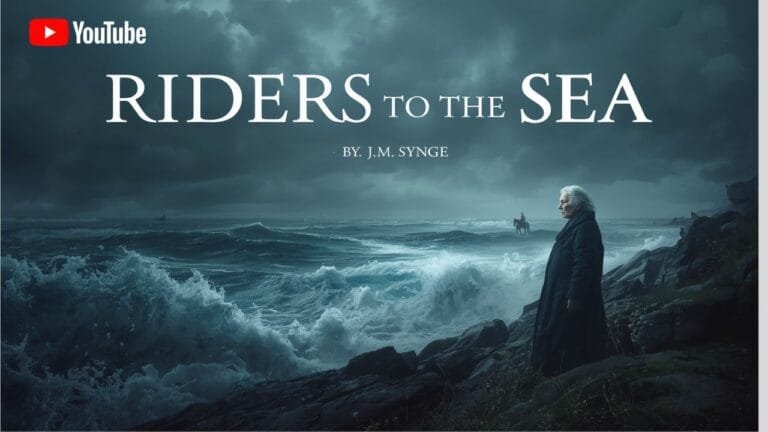

Riders to the Sea (A Play in One Act)
Written by: John Millington Synge
About the Author (English)
John Millington Synge (1871–1909) was one of Ireland’s greatest dramatists, poets, and prose writers. He was born on 16 April 1871 in Rathfarnham, near Dublin, Ireland. Synge studied music and literature before deciding to become a writer. Inspired by the famous Irish poet W.B. Yeats, he visited the Aran Islands, where he closely observed the lives of poor Irish fishermen. These experiences became the foundation of many of his plays.
Synge is known for portraying the struggles, traditions, beliefs, and hardships of ordinary Irish villagers. His language is simple yet poetic, filled with realistic dialogues and deep emotions. His plays often focus on human suffering, fate, religion, and the power of nature.
His most famous works include:
- Riders to the Sea (1904)
- The Playboy of the Western World (1907)
- The Well of the Saints (1905)
- In the Shadow of the Glen (1903)
Although Synge died at the young age of 38, his works greatly influenced modern English and Irish drama. Today, he is regarded as one of the founders of modern Irish theatre.
लेखक परिचय (Hindi)
जॉन मिलिंगटन सिंज (1871–1909) आयरलैंड के प्रसिद्ध नाटककार, कवि और गद्य लेखक थे। उनका जन्म 16 अप्रैल 1871 को आयरलैंड के डबलिन के पास रैथफार्नम में हुआ था। प्रारंभ में उन्होंने संगीत और साहित्य का अध्ययन किया, लेकिन बाद में उन्होंने अपना जीवन लेखन को समर्पित कर दिया।
प्रसिद्ध कवि डब्ल्यू. बी. यीट्स की सलाह पर वे अरन द्वीप (Aran Islands) गए। वहाँ उन्होंने मछुआरों के कठिन जीवन, उनकी गरीबी, संघर्ष, धार्मिक आस्था और समुद्र पर निर्भर जीवन को बहुत करीब से देखा। यही अनुभव बाद में उनके नाटकों का आधार बने।
उनकी रचनाओं में प्रकृति की शक्ति, भाग्य, मृत्यु, दुख और मानवीय संघर्ष का अत्यंत प्रभावशाली चित्रण मिलता है।
उनकी प्रमुख रचनाएँ हैं—
- Riders to the Sea (1904)
- The Playboy of the Western World (1907)
- The Well of the Saints (1905)
- In the Shadow of the Glen (1903)
केवल 38 वर्ष की आयु में उनका निधन हो गया, लेकिन उन्होंने अंग्रेज़ी और आयरिश साहित्य में अमिट छाप छोड़ी।
About the Play (English)
Riders to the Sea is a one-act tragic play written by John Millington Synge and first performed in 1904. It is considered one of the greatest tragedies in modern English literature.
The play is set on the Aran Islands off the western coast of Ireland. The people living there depend entirely on the sea for their livelihood. However, the sea is also dangerous because it often claims the lives of fishermen.
The play tells the heartbreaking story of Maurya, an old woman who loses her husband, father-in-law, and six sons to the sea. When her last surviving son Bartley decides to cross the sea despite her fears, tragedy strikes once again.
The play explores themes such as:
- The power of fate
- The cruelty of nature
- Human suffering
- Faith in God
- Death as an unavoidable reality
Despite its simple plot, the play has deep emotional and philosophical meaning.
नाटक का परिचय (Hindi)
Riders to the Sea एक एकांकी (One-Act Tragedy) है जिसे जॉन मिलिंगटन सिंज ने लिखा था। इसका प्रथम मंचन 1904 में हुआ।
यह नाटक आयरलैंड के अरन द्वीप पर रहने वाले गरीब मछुआरों के जीवन पर आधारित है। वहाँ के लोग अपनी जीविका के लिए पूरी तरह समुद्र पर निर्भर रहते हैं, लेकिन वही समुद्र उनकी सबसे बड़ी त्रासदी भी बन जाता है।
नाटक की मुख्य पात्र मौर्या (Maurya) है, जिसने समुद्र में अपने पति, ससुर और छह बेटों को खो दिया है। उसका अंतिम जीवित बेटा बार्टली (Bartley) भी समुद्र पार जाने का निर्णय लेता है। मौर्या उसे रोकने की बहुत कोशिश करती है, लेकिन अंत में समुद्र उसे भी निगल जाता है।
यह नाटक निम्न विषयों को प्रस्तुत करता है—
- भाग्य की अनिवार्यता
- प्रकृति की अपार शक्ति
- मानव जीवन का संघर्ष
- ईश्वर में विश्वास
- मृत्यु की अपरिहार्यता
यह नाटक आकार में छोटा है, लेकिन भावनात्मक रूप से अत्यंत प्रभावशाली है।
Main Characters
| Character | Description |
|---|---|
| Maurya | An old mother who has lost almost all her family members to the sea. |
| Bartley | Maurya’s youngest and last surviving son. |
| Cathleen | Maurya’s elder daughter who cares for the family. |
| Nora | Maurya’s younger daughter. |
| Priest | Consoles the family and believes God will protect them. |
| Villagers | Bring the tragic news at the end of the play. |
Themes of the Play
- Fate vs Human Effort
- The Power of Nature
- Death and Loss
- Motherly Love
- Faith and Religion
- Poverty and Survival
- Acceptance of Destiny
Part 2: Deep Chapter Summary (English)
Riders to the Sea – John Millington Synge
Introduction
Riders to the Sea is a one-act tragedy that portrays the harsh realities of life on the Aran Islands, located off the west coast of Ireland. The people living on these islands depend entirely on the sea for fishing, transportation, and survival. However, the same sea that provides them with food and livelihood also takes away their loved ones. The play presents the tragic story of Maurya, an elderly mother who loses every male member of her family to the sea. It explores themes of fate, suffering, motherhood, faith, and the unstoppable power of nature.
Beginning of the Play
The play opens inside a poor cottage on one of the Aran Islands. The atmosphere is gloomy and silent. Two sisters, Cathleen and Nora, are worried because their brother Michael has been missing for several days. A priest believes that Michael has drowned in the sea, but no body has been found.
Nora secretly brings a bundle of clothes that has been sent by the priest. These clothes were recovered from the body of an unknown drowned man found in Donegal, far away from the island. The sisters are afraid to open the bundle because they fear that the clothes may belong to Michael. They decide to examine them secretly so that their old mother, Maurya, will not suffer another shock.
This opening scene immediately creates suspense and sadness. It shows how fear has become a normal part of life for families living by the sea.
Maurya’s Suffering
Maurya enters the room looking tired, weak, and heartbroken. She has already suffered unimaginable losses. Before the play begins, the sea has claimed:
- Her husband
- Her father-in-law
- Six of her sons
Now only one son, Bartley, remains alive.
Maurya is deeply worried because Bartley plans to travel to the mainland to sell horses. The weather is dangerous, and she fears that the sea will take him away too.
She pleads with Bartley not to go. She believes that after losing so many family members, she cannot bear another tragedy. However, Bartley explains that the family is poor and depends on the money from selling the horses. If he does not go, they will have no means of survival.
Bartley’s Departure
Despite his mother’s warnings, Bartley prepares for the journey.
Maurya is too upset to bless him before he leaves. Later, Cathleen persuades her to carry food and her blessing to Bartley before he boards the boat.
Maurya leaves the cottage hoping to meet him.
While she is away, Cathleen and Nora finally examine the clothes in the bundle. They carefully compare the socks and shirt with Michael’s belongings and realize that the clothes indeed belong to Michael.
The sisters are overcome with grief. They now know for certain that Michael has died, but they decide not to tell Maurya immediately because they fear it will break her heart.
Maurya’s Vision
Maurya soon returns home, looking frightened and shocked.
She tells her daughters that she saw a terrifying vision while trying to bless Bartley.
She says she saw Bartley riding the red mare, but behind him she saw Michael riding a grey pony. Since Michael is already dead, this vision seems supernatural.
Maurya believes it is a sign that Bartley is also going to die.
This vision becomes the turning point of the play. It creates a feeling of unavoidable doom and emphasizes the power of fate.
The Tragic News
Soon afterwards, the villagers arrive carrying Bartley’s dead body.
They explain that Bartley was thrown into the sea after his horse was frightened. The horse knocked him down, and the waves swept him away.
The sea has claimed Maurya’s last surviving son.
The tragedy is complete.
Maurya has now lost:
- Her husband
- Her father-in-law
- Her father
- Six elder sons
- Michael
- Bartley
No male member of her family remains alive.
Maurya’s Final Acceptance
Instead of crying loudly or protesting against fate, Maurya speaks calmly.
She realizes that the sea has taken everyone it wanted.
She says that no more suffering can come to her because there is no one left for the sea to claim.
She prepares Bartley’s body for burial and thanks God that all her sons are finally together.
Her famous final words express complete acceptance of fate:
“No man at all can be living forever, and we must be satisfied.”
These words show that human beings cannot escape death. Everyone must eventually accept the will of God and the power of nature.
Character Development
Maurya
Maurya is the central character. She represents every mother who suffers because of forces beyond her control. Throughout the play she changes from fear and anxiety to complete acceptance of fate.
Bartley
Bartley is brave, hardworking, and responsible. Although he knows the danger, he risks his life because his family needs money. He symbolizes human courage against nature.
Cathleen
Cathleen is practical, caring, and emotionally strong. She tries to protect both Nora and Maurya from further sorrow.
Nora
Nora is gentle and sensitive. She shares Cathleen’s concern and helps uncover the truth about Michael’s death.
Major Themes
1. Fate
The play suggests that human beings cannot escape destiny. No matter how much Maurya tries, Bartley cannot avoid his fate.
2. Power of Nature
The sea is both life-giver and destroyer. It feeds the islanders but also takes away their loved ones.
3. Motherhood
Maurya’s unconditional love and endless suffering make her one of the greatest tragic mothers in literature.
4. Death
Death is shown as an unavoidable part of life. Every human being must eventually accept it.
5. Poverty
Bartley risks his life because the family desperately needs money. Poverty forces people to make dangerous choices.
6. Faith in God
Although the characters suffer greatly, they continue to believe in God’s will and accept His decisions.
Symbols in the Play
- The Sea – Represents both life and death.
- The Horses – Symbolize fate and the journey toward death.
- Michael’s Clothes – Represent the confirmation of death.
- Maurya’s Blessing – Symbolizes a mother’s love and protection, though it cannot change destiny.
- The Vision – Represents supernatural warning and inevitable fate.
Moral of the Play
The play teaches that human beings are powerless before fate and nature. Courage, love, and faith help people endure suffering, but no one can escape death. True peace comes from accepting life’s realities with dignity and courage.
Conclusion
Riders to the Sea is one of the finest tragic plays in English literature. Through the simple story of Maurya and her family, John Millington Synge presents universal truths about life, death, fate, and human endurance. The play’s emotional depth, realistic characters, and powerful ending make it a timeless masterpiece that continues to move readers around the world.
Part 3: 50 MCQs with Answers (English)
Riders to the Sea – John Millington Synge
1. Who is the author of Riders to the Sea?
A. W.B. Yeats
B. John Millington Synge ✅
C. G.B. Shaw
D. Oscar Wilde
2. Riders to the Sea is a—
A. Novel
B. Poem
C. One-act play ✅
D. Essay
3. Where is the play set?
A. London
B. Scotland
C. Aran Islands, Ireland ✅
D. Dublin
4. Who is the central character?
A. Bartley
B. Michael
C. Nora
D. Maurya ✅
5. Maurya is—
A. A teacher
B. An old mother ✅
C. A fisherman
D. A doctor
6. How many daughters does Maurya have?
A. One
B. Two ✅
C. Three
D. Four
7. What are the names of Maurya’s daughters?
A. Mary and Jane
B. Cathleen and Nora ✅
C. Anne and Kate
D. Sarah and Lucy
8. Who is Michael?
A. Maurya’s husband
B. Priest
C. Maurya’s missing son ✅
D. Villager
9. Who is Bartley?
A. Priest
B. Maurya’s youngest and last surviving son ✅
C. Fisherman
D. Teacher
10. Why does Bartley want to go to the mainland?
A. To study
B. To meet friends
C. To sell horses ✅
D. To buy food
11. What is Maurya afraid of?
A. Storm
B. Hunger
C. The sea taking Bartley ✅
D. Darkness
12. What had already happened to Michael?
A. Married
B. Sick
C. Missing at sea ✅
D. Left home
13. Who brings Michael’s clothes?
A. Bartley
B. Villagers
C. The priest sends them ✅
D. Sailor
14. Why do Cathleen and Nora hide the clothes?
A. They are dirty.
B. They don’t want Maurya to know immediately. ✅
C. They want to sell them.
D. They are afraid.
15. The clothes belonged to—
A. Bartley
B. Father
C. Priest
D. Michael ✅
16. What does Maurya try to give Bartley?
A. Money
B. Book
C. Her blessing ✅
D. Clothes
17. What vision does Maurya see?
A. Rain
B. Michael riding behind Bartley ✅
C. Fire
D. Ship
18. Michael appears on—
A. White horse
B. Black horse
C. Grey pony ✅
D. Camel
19. Bartley rides—
A. White horse
B. Black horse
C. Red mare ✅
D. Donkey
20. Maurya’s vision symbolizes—
A. Happiness
B. Death and fate ✅
C. Wealth
D. Success
21. How does Bartley die?
A. Drowning while swimming
B. Knocked into the sea by a horse ✅
C. Illness
D. Falling from a tree
22. Who brings Bartley’s body home?
A. Priest
B. Family
C. Villagers ✅
D. Police
23. What does the sea symbolize?
A. Peace
B. Wealth
C. Life and death ✅
D. Education
24. Which theme is most important?
A. Comedy
B. Adventure
C. Fate ✅
D. Romance
25. Maurya loses—
A. One son
B. Three sons
C. Five sons
D. All her sons ✅
26. Bartley ignores—
A. Friends
B. Priest
C. His mother’s warning ✅
D. Villagers
27. Why does Bartley still travel?
A. Curiosity
B. Vacation
C. Family needs money ✅
D. Adventure
28. The family depends on—
A. Farming
B. Business
C. The sea ✅
D. Mining
29. The priest believes—
A. Michael is alive.
B. God will protect Bartley. ✅
C. Sea is safe.
D. Horses are dangerous.
30. Cathleen is—
A. Careless
B. Responsible and caring ✅
C. Cruel
D. Proud
31. Nora is—
A. Angry
B. Sensitive and gentle ✅
C. Selfish
D. Brave soldier
32. The ending of the play is—
A. Happy
B. Romantic
C. Comic
D. Tragic ✅
33. Maurya finally accepts—
A. Wealth
B. Success
C. God’s will and fate ✅
D. Defeat
34. Which emotion dominates the play?
A. Joy
B. Humor
C. Sorrow ✅
D. Excitement
35. What literary genre is the play?
A. Comedy
B. Tragedy ✅
C. Satire
D. Epic
36. The sea is portrayed as—
A. Friendly
B. Weak
C. Powerful and merciless ✅
D. Calm
37. What is the major conflict?
A. Man vs Man
B. Man vs Nature ✅
C. Man vs Society
D. Man vs Technology
38. Maurya’s greatest strength is—
A. Wealth
B. Beauty
C. Patience and endurance ✅
D. Intelligence
39. What does Michael’s clothing represent?
A. Wealth
B. Proof of his death ✅
C. Victory
D. Courage
40. Which family member survives at the end?
A. Bartley
B. Michael
C. Cathleen and Nora ✅
D. None
41. The play mainly teaches—
A. To avoid work.
B. To accept destiny with courage. ✅
C. To become rich.
D. To fear people.
42. The atmosphere of the play is—
A. Funny
B. Joyful
C. Gloomy and emotional ✅
D. Exciting
43. What is the importance of horses in the play?
A. Decoration
B. They become part of Bartley’s fate. ✅
C. Entertainment
D. Business only
44. Maurya’s final speech expresses—
A. Anger
B. Revenge
C. Peaceful acceptance ✅
D. Excitement
45. The title Riders to the Sea refers to—
A. Tourists
B. Soldiers
C. People who travel on the sea and face death ✅
D. Sailors only
46. Which value is highlighted in the play?
A. Greed
B. Pride
C. Faith and endurance ✅
D. Revenge
47. Why is the play considered realistic?
A. It has magic.
B. It has kings.
C. It portrays the real struggles of island life. ✅
D. It is based on mythology.
48. Which statement is TRUE?
A. Bartley survives.
B. Michael returns home.
C. Maurya loses every male member of her family. ✅
D. The sea becomes calm forever.
49. What message does Synge give?
A. Nature can always be controlled.
B. Wealth is everything.
C. Human beings cannot escape fate, but they can face it with courage. ✅
D. Adventure is the greatest goal.
50. Which line best reflects the message of the play?
A. Fortune favors the brave.
B. Time is money.
C. No man can live forever; one must accept the will of God. ✅
D. Knowledge is power.
notice : इस article लिखने के लिए हमने west bengal sylabus के class -12 English की पुस्तक का help लिए। हमारा उद्देश्य केवल छात्रों को शिक्षित करना है। Google से गुजारिश है हमारे post को रैंक करे और छात्रों को शिक्षित करने में हमारी मदद करे।