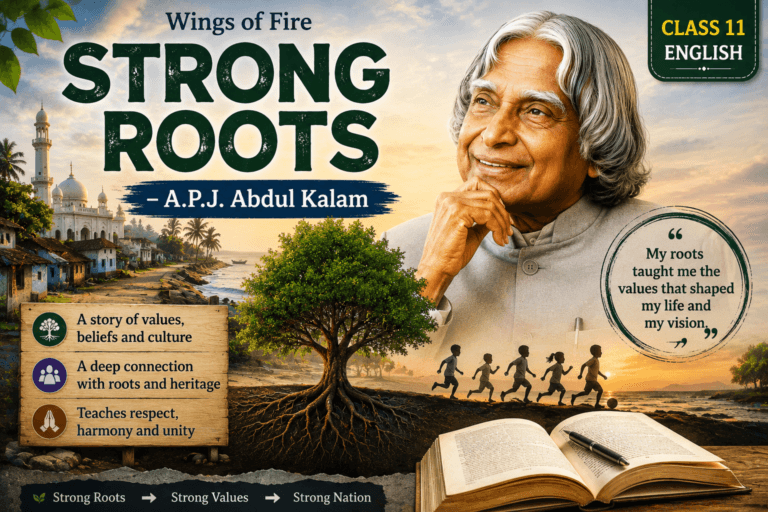

Strong Roots – A.P.J. Abdul Kalam
About the Author (English)
Dr. Avul Pakir Jainulabdeen Abdul Kalam (1931–2015) was one of India’s greatest scientists, visionary leaders, and the 11th President of India (2002–2007). He is popularly known as the “Missile Man of India” because of his remarkable contribution to India’s missile and space programmes.
Dr. Kalam was born on 15 October 1931 in Rameswaram, a small island town in Tamil Nadu. He belonged to a humble middle-class Muslim family. His father, Jainulabdeen, was a boat owner and imam at the local mosque, while his mother, Ashiamma, was a kind-hearted homemaker who fed many needy people every day. Although his family was not wealthy, they taught him the values of honesty, discipline, kindness, simplicity, and hard work.
Kalam completed his schooling in Rameswaram and later graduated in Physics from St. Joseph’s College, Tiruchirappalli. He then studied Aerospace Engineering at the Madras Institute of Technology (MIT). His career began at the Defence Research and Development Organisation (DRDO), after which he joined the Indian Space Research Organisation (ISRO).
At ISRO, he played a key role in developing India’s first Satellite Launch Vehicle (SLV-III), which successfully launched the Rohini satellite into space in 1980. Later, he became the chief architect of India’s Integrated Guided Missile Development Programme (IGMDP), leading the development of missiles such as Agni and Prithvi.
Because of his extraordinary achievements, Dr. Kalam received many prestigious awards, including the Padma Bhushan (1981), Padma Vibhushan (1990), and Bharat Ratna (1997), India’s highest civilian award.
Besides being a scientist, Dr. Kalam was also a famous author. His well-known books include Wings of Fire, Ignited Minds, India 2020, My Journey, and The Luminous Sparks.
Dr. Kalam believed that education, discipline, spirituality, and dreams are the keys to success. He inspired millions of students with his message:
“Dream, dream, dream. Dreams transform into thoughts, and thoughts result in action.”
He passed away on 27 July 2015 while delivering a lecture at the Indian Institute of Management (IIM), Shillong. Even today, he is remembered as the People’s President and one of India’s greatest role models.
लेखक परिचय (Hindi)
डॉ. ए. पी. जे. अब्दुल कलाम (1931–2015) भारत के महान वैज्ञानिक, प्रेरणादायक व्यक्तित्व तथा भारत के 11वें राष्ट्रपति थे। उन्हें “भारत के मिसाइल मैन” के नाम से जाना जाता है क्योंकि उन्होंने भारत के मिसाइल एवं अंतरिक्ष कार्यक्रमों में महत्वपूर्ण योगदान दिया।
उनका जन्म 15 अक्टूबर 1931 को तमिलनाडु के रामेश्वरम में एक साधारण मुस्लिम परिवार में हुआ था। उनके पिता जैनुलाब्दीन एक नाविक तथा मस्जिद के इमाम थे। उनकी माता आशियम्मा अत्यंत दयालु और धार्मिक महिला थीं। वे प्रतिदिन अपने घर आने वाले जरूरतमंद लोगों को भोजन कराती थीं।
आर्थिक कठिनाइयों के बावजूद उनके माता-पिता ने उन्हें ईमानदारी, अनुशासन, मेहनत, सादगी और मानवता के संस्कार दिए।
उन्होंने अपनी प्रारंभिक शिक्षा रामेश्वरम में प्राप्त की। इसके बाद सेंट जोसेफ कॉलेज से भौतिक विज्ञान की पढ़ाई की और मद्रास इंस्टीट्यूट ऑफ टेक्नोलॉजी (MIT) से एयरोस्पेस इंजीनियरिंग की शिक्षा प्राप्त की।
उन्होंने अपने वैज्ञानिक जीवन की शुरुआत DRDO से की और बाद में ISRO में शामिल हुए। उन्होंने भारत के पहले Satellite Launch Vehicle (SLV-III) के विकास में महत्वपूर्ण भूमिका निभाई तथा रोहिणी उपग्रह को सफलतापूर्वक अंतरिक्ष में स्थापित कराया।
बाद में उन्होंने अग्नि और पृथ्वी जैसी मिसाइलों के विकास का नेतृत्व किया। इसी कारण उन्हें “मिसाइल मैन ऑफ इंडिया” कहा गया।
उन्हें पद्म भूषण, पद्म विभूषण तथा भारत का सर्वोच्च नागरिक सम्मान भारत रत्न प्राप्त हुआ।
वे एक प्रसिद्ध लेखक भी थे। उनकी प्रमुख पुस्तकें हैं—
- Wings of Fire
- Ignited Minds
- India 2020
- My Journey
- The Luminous Sparks
डॉ. कलाम का विश्वास था कि सपने, शिक्षा, मेहनत और आध्यात्मिकता जीवन की सफलता की कुंजी हैं।
उनका प्रसिद्ध कथन है—
“सपने वह नहीं जो आप सोते समय देखते हैं, सपने वह हैं जो आपको सोने नहीं देते।”
27 जुलाई 2015 को IIM शिलांग में व्याख्यान देते समय उनका निधन हो गया। आज भी वे लाखों युवाओं के प्रेरणास्रोत हैं।
About the Chapter (English)
“Strong Roots” is an extract from Dr. A.P.J. Abdul Kalam’s famous autobiography Wings of Fire. In this chapter, Dr. Kalam recalls his childhood memories in the small island town of Rameswaram. He describes his loving parents, the peaceful atmosphere of his hometown, and the values that shaped his personality.
The chapter focuses on family values, religious harmony, spirituality, discipline, simplicity, generosity, hard work, and self-belief. Kalam explains how his father taught him that prayer is not merely a religious ritual but a way of connecting with the Divine and understanding oneself. His mother’s kindness inspired him to become compassionate, while the friendship between his Muslim father and the Hindu temple priest taught him the importance of communal harmony and mutual respect.
Through simple incidents from his childhood, Kalam shows that true success comes from strong moral values rather than wealth or status. The chapter also highlights how difficulties in life should be accepted as opportunities for learning and personal growth.
Overall, Strong Roots is an inspiring lesson about character-building, faith, humanity, and the importance of remaining grounded even after achieving great success.
Deep Chapter Summary (English)
Strong Roots is a touching autobiographical chapter taken from Dr. A.P.J. Abdul Kalam’s famous autobiography Wings of Fire. In this chapter, the author shares his childhood memories and explains how his family, surroundings, and spiritual upbringing laid the strong foundation of his life.
Dr. Kalam begins by introducing himself as a boy born into a middle-class Tamil Muslim family in the beautiful island town of Rameswaram, located in the then Madras State (now Tamil Nadu). Although his family was not rich, it was filled with love, discipline, honesty, and strong moral values.
His father, Jainulabdeen, had little formal education and was not wealthy. However, he possessed extraordinary wisdom, deep spirituality, and immense generosity. He believed in living a simple life without unnecessary luxuries. He always ensured that his family had everything essential, such as food, clothes, medicine, and shelter. Kalam describes his childhood as materially simple but emotionally secure.
His mother, Ashiamma, was equally kind and generous. Every day she cooked food not only for her family but also for many poor and needy people. Kalam remembers eating his meals on a banana leaf while sitting on the kitchen floor. The simple meal of rice, sambar, homemade pickle, and fresh coconut chutney became one of his sweetest childhood memories.
Rameswaram was famous for the ancient Shiva Temple, one of the holiest pilgrimage sites in India. Although Kalam belonged to a Muslim family, Hindus and Muslims lived together peacefully. This atmosphere of communal harmony deeply influenced his thinking.
Every evening, Kalam accompanied his father to the mosque for prayers. As a child, he could not understand the Arabic verses, but he firmly believed that sincere prayers reached God. After prayers, people from different religions waited outside the mosque with bowls of water. Kalam’s father dipped his fingers into the water and prayed for the sick people. Many later returned to thank him after recovering. However, his father humbly reminded them to thank Allah instead of him.
One of the strongest influences on young Kalam was the friendship between his father and Pakshi Lakshmana Sastry, the chief priest of the Rameswaram Temple. Despite belonging to different religions, they often sat together discussing spiritual matters. Their friendship taught Kalam that true religion unites people rather than dividing them.
As Kalam grew older, he asked his father about the importance of prayer. His father explained that prayer is not something mysterious. It connects human beings with the Divine and removes barriers of caste, religion, wealth, and social status. According to him, prayer brings peace, strength, and unity.
His father also taught him that every human being is part of God’s creation. Therefore, people should not fear hardships or difficulties. Problems help individuals understand themselves better. Adversity is not a punishment but an opportunity for self-examination, growth, and inner strength.
Kalam once asked why people visited his father for advice instead of solving their own problems. His father explained that when people feel lonely, frightened, or helpless, they naturally seek guidance from others. However, true solutions lie within oneself. External help can guide a person, but lasting peace comes only through self-awareness and faith.
Another remarkable quality of Jainulabdeen was his disciplined lifestyle. He woke up every day at 4:00 a.m., offered the Namaz, walked nearly four miles to his coconut grove, collected coconuts, and returned home before breakfast. He followed this routine even in his late sixties. His discipline and dedication left a lasting impression on young Kalam.
In the concluding part of the chapter, Dr. Kalam reflects on how these early lessons shaped his own life. As a scientist, he tried to follow the same principles of honesty, hard work, humility, discipline, and faith. He believes that there is a divine power that guides every individual through confusion, sorrow, failure, and disappointment toward success and peace.
The chapter ends with a powerful message that true strength does not come from wealth or power but from strong values, faith in God, self-discipline, compassion, and the courage to face difficulties with hope and confidence. These “strong roots” became the foundation of Dr. Kalam’s remarkable life and achievements.
Strong Roots – Deep Chapter Summary (Hindi)
अध्याय का विस्तृत सारांश (Deep Hindi Summary)
Strong Roots प्रसिद्ध वैज्ञानिक और भारत के पूर्व राष्ट्रपति डॉ. ए. पी. जे. अब्दुल कलाम की आत्मकथा “Wings of Fire” का एक प्रेरणादायक अंश है। इस अध्याय में डॉ. कलाम अपने बचपन, परिवार, माता-पिता, धार्मिक वातावरण, आध्यात्मिक शिक्षा और जीवन मूल्यों का वर्णन करते हैं। यह अध्याय बताता है कि किसी भी महान व्यक्ति की सफलता की जड़ें उसके बचपन के संस्कारों और परिवार की शिक्षा में छिपी होती हैं।
1. जन्म और परिवार
डॉ. अब्दुल कलाम का जन्म तमिलनाडु के रामेश्वरम नामक छोटे द्वीप नगर में एक साधारण मुस्लिम परिवार में हुआ था। उनका परिवार आर्थिक रूप से बहुत सम्पन्न नहीं था, लेकिन परिवार के सभी सदस्य ईमानदार, मेहनती और दयालु थे।
उनके पिता जैनुलाब्दीन अधिक पढ़े-लिखे नहीं थे और उनके पास अधिक धन भी नहीं था, फिर भी वे अत्यंत बुद्धिमान, सरल और धार्मिक व्यक्ति थे।
उनकी माता आशियम्मा अत्यंत दयालु और उदार थीं। वे प्रतिदिन अपने परिवार के साथ-साथ अनेक गरीब और जरूरतमंद लोगों को भी भोजन कराती थीं। इससे डॉ. कलाम ने बचपन में ही सेवा, दया और मानवता का महत्व सीखा।
2. माता-पिता का प्रभाव
डॉ. कलाम बताते हैं कि उनके माता-पिता आदर्श दम्पति थे।
उनके पिता सादा जीवन और उच्च विचार में विश्वास रखते थे। वे कभी अनावश्यक सुख-सुविधाओं का उपयोग नहीं करते थे।
उनकी माता प्रेम, त्याग और सेवा की मूर्ति थीं।
इन दोनों के कारण डॉ. कलाम का बचपन आर्थिक रूप से साधारण लेकिन मानसिक और भावनात्मक रूप से बहुत सुरक्षित रहा।
3. घर और बचपन
डॉ. कलाम का घर उन्नीसवीं शताब्दी के मध्य में बना हुआ एक बड़ा पक्का घर था।
यह घर मस्जिद स्ट्रीट में स्थित था।
घर में किसी भी प्रकार का दिखावा नहीं था, लेकिन भोजन, कपड़े और दवाइयों जैसी आवश्यक वस्तुओं की कभी कमी नहीं रही।
डॉ. कलाम अपनी माँ के साथ रसोईघर में जमीन पर बैठकर केले के पत्ते पर भोजन करते थे।
उनकी माँ उन्हें चावल, सांभर, अचार और नारियल की चटनी बड़े प्रेम से परोसती थीं।
आज भी वे उन दिनों को प्रेम और सम्मान के साथ याद करते हैं।
4. रामेश्वरम का धार्मिक वातावरण
रामेश्वरम केवल एक मुस्लिम क्षेत्र नहीं था बल्कि वहाँ हिन्दू और मुस्लिम दोनों समुदाय प्रेम और भाईचारे से रहते थे।
पास ही प्रसिद्ध रामनाथस्वामी शिव मंदिर था।
उसी प्रकार एक पुरानी मस्जिद भी थी जहाँ उनके पिता रोज़ शाम को नमाज़ पढ़ने जाते थे।
यह वातावरण डॉ. कलाम को बचपन से ही धार्मिक सहिष्णुता (Religious Tolerance) और साम्प्रदायिक सद्भाव (Communal Harmony) की शिक्षा देता रहा।
5. सभी धर्मों का सम्मान
नमाज़ समाप्त होने के बाद विभिन्न धर्मों के लोग उनके पिता के पास आते थे।
वे पानी से भरे कटोरे लाते थे।
डॉ. कलाम के पिता उसमें अपनी उंगलियाँ डुबोकर अल्लाह से प्रार्थना करते थे।
लोग उस पानी को बीमार व्यक्तियों को पिलाते थे और जब वे स्वस्थ हो जाते थे तो धन्यवाद देने उनके घर आते थे।
लेकिन उनके पिता हमेशा कहते थे—
“मुझे धन्यवाद मत दो, अल्लाह का शुक्र अदा करो।”
इससे उनकी विनम्रता और ईश्वर पर विश्वास प्रकट होता है।
6. हिन्दू पुजारी से मित्रता
डॉ. कलाम के पिता के सबसे घनिष्ठ मित्र थे—
पक्षी लक्ष्मण शास्त्री
जो रामेश्वरम मंदिर के मुख्य पुजारी थे।
दोनों अलग-अलग धर्मों से होने के बावजूद घंटों बैठकर आध्यात्मिक विषयों पर चर्चा करते थे।
इससे डॉ. कलाम ने सीखा कि
धर्म मनुष्यों को बाँटता नहीं बल्कि जोड़ता है।
7. प्रार्थना का वास्तविक अर्थ
एक दिन डॉ. कलाम ने अपने पिता से पूछा—
“प्रार्थना करने का क्या महत्व है?”
उनके पिता ने उत्तर दिया—
प्रार्थना कोई रहस्यमयी कार्य नहीं है।
प्रार्थना मनुष्य की आत्मा को ईश्वर से जोड़ती है।
जब मनुष्य सच्चे मन से प्रार्थना करता है तो वह जाति, धर्म, धन और उम्र के सभी भेदभाव से ऊपर उठ जाता है।
वह पूरे ब्रह्माण्ड का एक छोटा-सा हिस्सा बन जाता है।
यही प्रार्थना की सबसे बड़ी शक्ति है।
8. कठिनाइयों का महत्व
डॉ. कलाम के पिता ने उन्हें जीवन का सबसे बड़ा संदेश दिया—
“जब कठिनाइयाँ आएँ तो उनसे डरना नहीं चाहिए।”
उन्होंने कहा—
हर दुःख और समस्या हमें कुछ नया सिखाती है।
कठिनाइयाँ आत्मचिंतन (Introspection) का अवसर देती हैं।
यदि हम धैर्य रखें तो वही कठिनाइयाँ आगे चलकर सफलता का मार्ग बन जाती हैं।
यही शिक्षा आगे चलकर डॉ. कलाम के पूरे जीवन की शक्ति बनी।
9. लोगों की सहायता क्यों करते थे?
डॉ. कलाम ने अपने पिता से पूछा—
“यदि आप इतने ज्ञानी हैं तो लोगों को यह सब समझा क्यों नहीं देते?”
उनके पिता ने उत्तर दिया—
जब मनुष्य अकेला पड़ जाता है या संकट में होता है, तब वह किसी सहारे की तलाश करता है।
मैं केवल लोगों और ईश्वर के बीच एक माध्यम (Go-between) हूँ।
वास्तविक शक्ति ईश्वर में है, मुझमें नहीं।
इस उत्तर ने डॉ. कलाम को जीवनभर के लिए विनम्र बना दिया।
10. अनुशासन और मेहनत
डॉ. कलाम के पिता प्रतिदिन सुबह 4 बजे उठते थे।
वे सबसे पहले नमाज़ पढ़ते थे।
उसके बाद लगभग चार मील दूर स्थित नारियल के बाग तक पैदल जाते थे।
वहाँ से लगभग बारह नारियल कंधे पर उठाकर घर लाते थे।
इसके बाद ही वे नाश्ता करते थे।
उन्होंने यह दिनचर्या वृद्धावस्था तक जारी रखी।
इससे डॉ. कलाम ने सीखा—
- समय का महत्व
- अनुशासन
- मेहनत
- आत्मनिर्भरता
11. पिता की शिक्षा का प्रभाव
डॉ. कलाम लिखते हैं कि उन्होंने अपने पूरे वैज्ञानिक जीवन में अपने पिता के आदर्शों का पालन करने का प्रयास किया।
उन्होंने समझा कि
ईश्वर मनुष्य को हर कठिन परिस्थिति से बाहर निकलने की शक्ति देता है।
यदि मनुष्य स्वयं पर विश्वास रखे और ईश्वर पर आस्था बनाए रखे तो वह किसी भी कठिनाई को पार कर सकता है।
12. अध्याय का मुख्य संदेश
यह अध्याय केवल डॉ. कलाम के बचपन की कहानी नहीं है बल्कि जीवन जीने की कला सिखाता है।
इससे हमें निम्नलिखित शिक्षाएँ मिलती हैं—
- सादगी सबसे बड़ा धन है।
- माता-पिता जीवन के पहले गुरु होते हैं।
- सभी धर्म समान हैं।
- प्रार्थना आत्मिक शक्ति देती है।
- कठिनाइयाँ सफलता की सीढ़ी होती हैं।
- अनुशासन और मेहनत सफलता की कुंजी हैं।
- दूसरों की सेवा करना सबसे बड़ा धर्म है।
- विनम्रता महान व्यक्ति की पहचान है।
- ईश्वर पर विश्वास कभी नहीं छोड़ना चाहिए।
- अच्छे संस्कार जीवन की सबसे मजबूत जड़ें (Strong Roots) होते हैं।
Strong Roots – 50 MCQs with Answers (English)
1. Who is the author of “Strong Roots”?
A. Ruskin Bond
B. A.P.J. Abdul Kalam
C. R.K. Narayan
D. Rabindranath Tagore
Answer: B
2. “Strong Roots” is taken from which autobiography?
A. India 2020
B. Ignited Minds
C. Wings of Fire
D. My Journey
Answer: C
3. Where was A.P.J. Abdul Kalam born?
A. Chennai
B. Hyderabad
C. Rameswaram
D. Delhi
Answer: C
4. Kalam belonged to a ______ family.
A. Rich
B. Royal
C. Middle-class Tamil
D. Business
Answer: C
5. What was the name of Kalam’s father?
A. Ashiamma
B. Jainulabdeen
C. Lakshmana Sastry
D. Bahadur
Answer: B
6. What was the name of Kalam’s mother?
A. Ashiamma
B. Saraswati
C. Fatima
D. Zainab
Answer: A
7. Kalam’s father was known for his ______.
A. Wealth
B. Political power
C. Wisdom and generosity
D. Fame
Answer: C
8. Kalam’s mother was famous for her ______.
A. Strictness
B. Generosity
C. Business
D. Singing
Answer: B
9. Where was Kalam’s ancestral house located?
A. Temple Street
B. Mosque Street
C. Beach Road
D. Gandhi Road
Answer: B
10. Kalam’s house was built in the ______ century.
A. 18th
B. 19th
C. 20th
D. 21st
Answer: B
11. The house was made of ______.
A. Wood
B. Marble
C. Limestone and brick
D. Bamboo
Answer: C
12. Kalam usually ate food with his ______.
A. Father
B. Friends
C. Mother
D. Grandmother
Answer: C
13. Food was served on a ______.
A. Steel plate
B. Banana leaf
C. Wooden tray
D. Glass plate
Answer: B
14. Which dish was commonly served?
A. Pizza
B. Rice and sambar
C. Pasta
D. Noodles
Answer: B
15. Rameswaram was famous for its ______.
A. Railway station
B. Shiva Temple
C. Airport
D. Palace
Answer: B
16. Kalam’s locality was predominantly ______.
A. Hindu
B. Christian
C. Muslim
D. Sikh
Answer: C
17. People of different religions lived ______.
A. Happily together
B. Separately
C. In fear
D. In conflict
Answer: A
18. Kalam’s father took him to the ______.
A. Temple
B. Church
C. Mosque
D. School
Answer: C
19. People brought bowls of ______ to Kalam’s father.
A. Milk
B. Water
C. Oil
D. Juice
Answer: B
20. They believed the blessed water would help ______.
A. Farmers
B. Patients
C. Soldiers
D. Students
Answer: B
21. Kalam’s father always asked people to thank ______.
A. Himself
B. Allah
C. Government
D. Doctors
Answer: B
22. Who was Pakshi Lakshmana Sastry?
A. A scientist
B. A doctor
C. The high priest of Rameswaram Temple
D. A teacher
Answer: C
23. Pakshi Lakshmana Sastry was a close friend of ______.
A. Kalam
B. Ashiamma
C. Jainulabdeen
D. Teacher
Answer: C
24. They often discussed ______ matters.
A. Politics
B. Spiritual
C. Sports
D. Business
Answer: B
25. According to Kalam’s father, prayer creates ______.
A. Wealth
B. Fear
C. Communion of the spirit
D. Competition
Answer: C
26. Prayer helps people rise above ______.
A. Wealth, caste and creed
B. Studies
C. Work
D. Food
Answer: A
27. Difficulties provide opportunities for ______.
A. Entertainment
B. Introspection
C. Laziness
D. Anger
Answer: B
28. What does adversity mean?
A. Happiness
B. Success
C. Hardship
D. Victory
Answer: C
29. Kalam’s father woke up every day at ______.
A. 6 a.m.
B. 5 a.m.
C. 4 a.m.
D. 7 a.m.
Answer: C
30. He first offered ______.
A. Breakfast
B. Namaz
C. Yoga
D. Exercise
Answer: B
31. After Namaz, he walked to a ______ grove.
A. Mango
B. Coconut
C. Banana
D. Bamboo
Answer: B
32. The grove was about ______ miles away.
A. Two
B. Three
C. Four
D. Five
Answer: C
33. He returned carrying about ______ coconuts.
A. Six
B. Eight
C. Twelve
D. Twenty
Answer: C
34. Kalam tried to ______ his father.
A. Ignore
B. Emulate
C. Criticize
D. Avoid
Answer: B
35. Kalam worked mainly in the field of ______.
A. Agriculture
B. Science and Technology
C. Law
D. Medicine
Answer: B
36. According to Kalam, divine power helps us overcome ______.
A. Confusion and failure
B. Hunger only
C. Poverty only
D. Rain
Answer: A
37. The title “Strong Roots” mainly refers to ______.
A. Trees
B. Family values and upbringing
C. Plants
D. Agriculture
Answer: B
38. Which quality best describes Jainulabdeen?
A. Proud
B. Wise
C. Selfish
D. Cruel
Answer: B
39. Which quality best describes Ashiamma?
A. Greedy
B. Generous
C. Angry
D. Lazy
Answer: B
40. The chapter mainly teaches ______.
A. Religious hatred
B. Humanity and values
C. Politics
D. War
Answer: B
41. What kind of childhood did Kalam have?
A. Luxurious
B. Secure and happy
C. Lonely
D. Unhappy
Answer: B
42. Which religion did Kalam belong to?
A. Hinduism
B. Islam
C. Christianity
D. Sikhism
Answer: B
43. Kalam believed his father’s teachings gave him ______.
A. Fear
B. Confidence and strength
C. Wealth
D. Fame
Answer: B
44. According to the chapter, true prayer brings ______.
A. Peace and unity
B. Money
C. Fame
D. Luxury
Answer: A
45. Kalam’s father avoided ______.
A. Hard work
B. Inessential comforts and luxuries
C. Prayer
D. Helping people
Answer: B
46. Which value is NOT highlighted in the chapter?
A. Simplicity
B. Compassion
C. Greed
D. Discipline
Answer: C
47. What does Kalam say guided him throughout his life?
A. Luck
B. Father’s teachings
C. Wealth
D. Politics
Answer: B
48. The relationship between Hindus and Muslims in Rameswaram was ______.
A. Hostile
B. Friendly
C. Violent
D. Competitive
Answer: B
49. What is the central theme of the chapter?
A. War
B. Science only
C. Family values, spirituality and humanity
D. Adventure
Answer: C
50. What is the most important message of “Strong Roots”?
A. Wealth brings success.
B. Strong moral values, faith, discipline and compassion build a great life.
C. Education alone is enough.
D. Power is the key to success.
Answer: B
notice : इस article लिखने के लिए हमने west bengal sylabus के class -12 English की पुस्तक का help लिए। हमारा उद्देश्य केवल छात्रों को शिक्षित करना है। Google से गुजारिश है हमारे post को रैंक करे और छात्रों को शिक्षित करने में हमारी मदद करे।