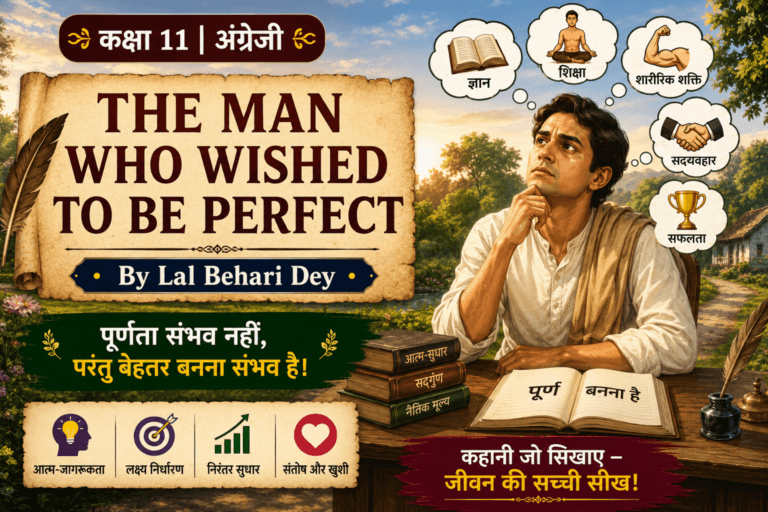

The Man Who Wished to Be Perfect
– Lal Behari Dey (Class 11 English)
✅ About the Author (English)
Lal Behari Dey (1824–1892) was an Indian writer, journalist, educator, and social reformer. He was born in 1824 in Bengal, India. He is best known for collecting and publishing Bengali folk tales in English, introducing Indian culture and traditions to readers around the world.
Lal Behari Dey studied at Bishop’s College, Calcutta, and later worked as a teacher, journalist, and Christian missionary. His writings are simple, engaging, and rich in moral values. Through his stories, he presented the everyday life, beliefs, customs, and wisdom of rural Bengal.
Some of his famous works include:
- Folk-Tales of Bengal (1883)
- Bengal Peasant Life (Govinda Samanta)
His contribution to Indian English literature is significant because he preserved traditional Indian folk stories for future generations.
✅ लेखक परिचय (Hindi)
लाल बिहारी डे (1824–1892) भारत के प्रसिद्ध लेखक, पत्रकार, शिक्षक और समाज सुधारक थे। उनका जन्म 1824 में बंगाल (भारत) में हुआ था।
वे विशेष रूप से बंगाल की लोककथाओं (Folk Tales) को एकत्रित करके अंग्रेज़ी भाषा में प्रकाशित करने के लिए प्रसिद्ध हैं। उनकी रचनाओं ने भारतीय संस्कृति, ग्रामीण जीवन और लोकविश्वास को विश्वभर के पाठकों तक पहुँचाया।
उन्होंने बिशप्स कॉलेज, कलकत्ता में शिक्षा प्राप्त की। बाद में वे शिक्षक, पत्रकार और लेखक के रूप में कार्य करने लगे।
उनकी भाषा सरल, रोचक और नैतिक मूल्यों से भरपूर है। उनकी कहानियाँ मनोरंजन के साथ-साथ जीवन की महत्वपूर्ण सीख भी देती हैं।
उनकी प्रमुख रचनाएँ हैं—
- Folk-Tales of Bengal (1883)
- Bengal Peasant Life (Govinda Samanta)
भारतीय अंग्रेज़ी साहित्य में लोककथाओं के संरक्षण के लिए उनका योगदान अत्यंत महत्वपूर्ण माना जाता है।
✅ About the Chapter (English)
The Man Who Wished to Be Perfect is a humorous and thought-provoking folk tale collected by Lal Behari Dey. The story revolves around a man who dreams of becoming absolutely perfect in every aspect of life.
Believing that perfection alone can bring happiness and respect, he constantly tries to remove every small fault from his life. However, in this endless search for perfection, he becomes dissatisfied and loses the simple joys of life.
The story gently reminds readers that perfection is impossible because every human being has strengths as well as weaknesses. Instead of chasing perfection, people should focus on self-improvement, honesty, kindness, and contentment.
The tale combines humour with a meaningful moral lesson, making it both entertaining and inspiring.
✅ अध्याय परिचय (Hindi)
The Man Who Wished to Be Perfect लाल बिहारी डे द्वारा संकलित एक रोचक और शिक्षाप्रद लोककथा है।
यह कहानी एक ऐसे व्यक्ति के बारे में है जो अपने जीवन के हर क्षेत्र में पूर्ण (Perfect) बनना चाहता है। उसे लगता है कि यदि वह बिल्कुल त्रुटिहीन हो जाएगा, तभी उसे सम्मान और सच्चा सुख मिलेगा।
इस उद्देश्य से वह अपनी हर छोटी-बड़ी कमी को दूर करने की कोशिश करता है। लेकिन धीरे-धीरे वह अपनी कमियों के बारे में इतना अधिक सोचने लगता है कि जीवन की खुशियाँ ही भूल जाता है।
अंत में उसे समझ आता है कि पूर्णता (Perfection) मनुष्य के लिए संभव नहीं है। हर व्यक्ति में कुछ गुण और कुछ कमियाँ होती हैं। इसलिए जीवन का लक्ष्य पूर्ण बनना नहीं, बल्कि स्वयं को निरंतर बेहतर बनाना होना चाहिए।
यह कहानी हास्य के माध्यम से आत्म-सुधार, संतोष और विनम्रता का महत्वपूर्ण संदेश देती है।
✅ Original Summary (English)
The Man Who Wished to Be Perfect tells the story of a man who desires to become completely perfect. He believes that if he can eliminate every weakness and mistake, he will earn respect, happiness, and success.
As time passes, he becomes obsessed with finding faults in himself. Instead of enjoying life, he spends all his time worrying about becoming flawless. The more he tries to become perfect, the more unhappy and dissatisfied he becomes.
Gradually, he realizes that perfection is impossible because no human being is free from mistakes. Every person has both strengths and weaknesses, and these imperfections make us human.
The story teaches that people should not waste their lives chasing impossible perfection. Instead, they should continue learning, improving themselves, and living with honesty, kindness, and self-confidence.
The tale leaves readers with an important message: true happiness comes from accepting ourselves while always trying to become better—not perfect.
✅ मौलिक सारांश (Hindi)
The Man Who Wished to Be Perfect एक ऐसे व्यक्ति की कहानी है जो अपने जीवन में हर प्रकार से पूर्ण बनना चाहता है। उसे विश्वास होता है कि यदि वह बिल्कुल त्रुटिहीन बन जाएगा, तो उसे सम्मान, सफलता और सुख प्राप्त होगा।
इसी सोच के कारण वह अपनी हर छोटी-छोटी गलती को सुधारने में लग जाता है। धीरे-धीरे वह अपनी कमियों के बारे में इतना अधिक सोचने लगता है कि जीवन का आनंद लेना ही भूल जाता है।
समय के साथ उसे यह एहसास होता है कि संसार में कोई भी मनुष्य पूरी तरह से परिपूर्ण नहीं होता। प्रत्येक व्यक्ति में कुछ अच्छाइयाँ और कुछ कमियाँ होती हैं। यही कमियाँ हमें सीखने और आगे बढ़ने का अवसर देती हैं।
अंततः वह समझता है कि जीवन का उद्देश्य पूर्ण बनना नहीं, बल्कि प्रतिदिन स्वयं को पहले से बेहतर बनाना है।
यह कहानी हमें सिखाती है कि हमें अपनी कमियों से निराश नहीं होना चाहिए। ईमानदारी, मेहनत, आत्मविश्वास और निरंतर आत्म-सुधार ही सच्ची सफलता और खुशी का मार्ग हैं।
✅ Chapter Themes (मुख्य विषय)
- Perfection vs. Self-Improvement (पूर्णता बनाम आत्म-विकास)
- Self-Acceptance (स्वयं को स्वीकार करना)
- Contentment (संतोष)
- Wisdom and Practical Thinking (बुद्धिमानी और व्यावहारिक सोच)
- Moral Values (नैतिक शिक्षा)
- Personal Growth (व्यक्तित्व विकास)
The Man Who Wished to Be Perfect – 50 MCQs with Answers
1. Who wrote The Man Who Wished to Be Perfect?
A) Rabindranath Tagore
B) Lal Behari Dey
C) Ruskin Bond
D) Leo Tolstoy
Answer: B) Lal Behari Dey
2. What type of story is this?
A) Novel
B) Folk Tale
C) Drama
D) Poem
Answer: B) Folk Tale
3. What was the man’s greatest wish?
A) To become rich
B) To become king
C) To become perfect
D) To travel the world
Answer: C) To become perfect
4. The main character constantly tried to—
A) Help others
B) Remove his faults
C) Build a house
D) Earn money
Answer: B) Remove his faults
5. The story mainly teaches—
A) Revenge
B) Self-improvement
C) Greed
D) Pride
Answer: B) Self-improvement
6. The man believed perfection would bring—
A) Happiness
B) Respect
C) Success
D) All of these
Answer: D) All of these
7. What made the man unhappy?
A) Poverty
B) His obsession with perfection
C) His friends
D) His village
Answer: B) His obsession with perfection
8. What is the central theme of the story?
A) War
B) Perfection vs. Self-Acceptance
C) Friendship
D) Adventure
Answer: B
9. The story belongs to—
A) Bengali folklore
B) Greek mythology
C) Roman history
D) Fairy tales
Answer: A
10. Which quality is most important in the story?
A) Wisdom
B) Anger
C) Jealousy
D) Pride
Answer: A
11. What lesson does the story give?
A) Nobody is perfect.
B) Wealth is everything.
C) Power is permanent.
D) Fear is necessary.
Answer: A
12. The man spent most of his time—
A) Sleeping
B) Searching for perfection
C) Farming
D) Travelling
Answer: B
13. The story encourages readers to—
A) Accept themselves
B) Compare with others
C) Fear mistakes
D) Avoid learning
Answer: A
14. The man’s biggest mistake was—
A) Laziness
B) Chasing impossible perfection
C) Dishonesty
D) Anger
Answer: B
15. Which value is highlighted?
A) Humility
B) Self-improvement
C) Patience
D) All of these
Answer: D
16. Lal Behari Dey is famous for—
A) Folk Tales of Bengal
B) Shakespearean Plays
C) Science Fiction
D) Detective Stories
Answer: A
17. The story is written in—
A) Difficult language
B) Simple language
C) Technical language
D) Scientific language
Answer: B
18. The man forgot to enjoy—
A) Life
B) Work
C) Nature
D) Books
Answer: A
19. The story is—
A) Humorous
B) Moral
C) Inspirational
D) All of these
Answer: D
20. The story teaches—
A) Contentment
B) Self-confidence
C) Continuous learning
D) All of these
Answer: D
21. Human beings always have—
A) Only strengths
B) Only weaknesses
C) Strengths and weaknesses
D) No qualities
Answer: C
22. The man finally realizes—
A) Perfection is impossible.
B) Money is important.
C) Luck decides everything.
D) Power is permanent.
Answer: A
23. Which emotion dominates the man?
A) Satisfaction
B) Obsession
C) Kindness
D) Hatred
Answer: B
24. The story mainly focuses on—
A) Character development
B) War
C) Business
D) Politics
Answer: A
25. The moral is—
A) Improve yourself every day.
B) Never work.
C) Fear failure.
D) Never make friends.
Answer: A
26. What should people strive for?
A) Perfection
B) Self-improvement
C) Wealth
D) Fame
Answer: B
27. Which quality makes a person better?
A) Pride
B) Learning from mistakes
C) Anger
D) Jealousy
Answer: B
28. The story advises readers to—
A) Accept imperfections
B) Give up
C) Stop learning
D) Avoid society
Answer: A
29. Perfection is shown as—
A) Easy
B) Impossible
C) Necessary
D) Common
Answer: B
30. What is more valuable than perfection?
A) Kindness
B) Growth
C) Wisdom
D) All of these
Answer: D
31. The story encourages—
A) Positive thinking
B) Hatred
C) Laziness
D) Violence
Answer: A
32. Which literary form is this?
A) Folk Tale
B) Sonnet
C) Epic
D) Ballad
Answer: A
33. The man’s thinking becomes—
A) Balanced
B) Unhealthy
C) Joyful
D) Carefree
Answer: B
34. The message is suitable for—
A) Children only
B) Adults only
C) Everyone
D) Teachers only
Answer: C
35. Which quality should be avoided?
A) Humility
B) Obsession
C) Patience
D) Honesty
Answer: B
36. Success comes through—
A) Learning
B) Hard work
C) Improvement
D) All of these
Answer: D
37. The story inspires—
A) Personal growth
B) Revenge
C) Pride
D) Fear
Answer: A
38. Which word best describes the main character?
A) Wise
B) Curious
C) Perfectionist
D) Cruel
Answer: C
39. The author wants readers to—
A) Become better people
B) Become famous
C) Become kings
D) Become rich
Answer: A
40. Which is the best title for the story?
A) A Perfect Man
B) The Man Who Wished to Be Perfect
C) The Clever King
D) The Wise Farmer
Answer: B
41. The story promotes—
A) Moral values
B) Dishonesty
C) Violence
D) Jealousy
Answer: A
42. The main conflict is between—
A) Man and nature
B) Man and himself
C) Two kings
D) Rich and poor
Answer: B
43. True happiness comes from—
A) Accepting yourself
B) Wealth
C) Fame
D) Luxury
Answer: A
44. Which quality is essential for improvement?
A) Patience
B) Practice
C) Self-awareness
D) All of these
Answer: D
45. The story ends with—
A) A valuable lesson
B) A war
C) A mystery
D) A tragedy
Answer: A
46. Which statement is correct?
A) Everyone is perfect.
B) Nobody is perfect.
C) Only kings are perfect.
D) Only scholars are perfect.
Answer: B
47. The story mainly belongs to—
A) Moral literature
B) Science fiction
C) Horror
D) Romance
Answer: A
48. Which quality helps in life?
A) Continuous learning
B) Anger
C) Pride
D) Jealousy
Answer: A
49. The author encourages readers to—
A) Keep improving
B) Stop trying
C) Fear failure
D) Compare themselves
Answer: A
50. The overall message of the story is—
A) Be better every day, not perfect.
B) Never make mistakes.
C) Wealth is success.
D) Only perfect people succeed.
Answer: A
notice : इस article लिखने के लिए हमने west bengal sylabus के class -11 English की पुस्तक का help लिए। हमारा उद्देश्य केवल छात्रों को शिक्षित करना है। Google से गुजारिश है हमारे post को रैंक करे और छात्रों को शिक्षित करने में हमारी मदद करे