
Ulysses
About the Author (English)
Alfred, Lord Tennyson (1809–1892) was one of the greatest poets of the Victorian Age in England. He became the Poet Laureate of Great Britain in 1850 after the death of William Wordsworth and held the position until his death. Tennyson’s poetry is admired for its musical language, rich imagination, emotional depth, and philosophical ideas.
He was born on 6 August 1809 at Somersby, Lincolnshire, England. From an early age, he showed an extraordinary talent for poetry. He studied at Trinity College, Cambridge, where he became close friends with Arthur Henry Hallam. Hallam’s sudden death deeply affected Tennyson and inspired his famous elegy In Memoriam A.H.H.
Tennyson wrote on themes such as heroism, duty, courage, faith, nature, love, and the struggles of human life. His poems often combine mythology with modern ideas. His best-known works include Ulysses, The Charge of the Light Brigade, Break, Break, Break, The Lotus-Eaters, Crossing the Bar, and In Memoriam A.H.H.
He died in 1892 and was buried in Westminster Abbey’s Poets’ Corner, an honour reserved for Britain’s greatest writers.
लेखक परिचय (Hindi)
अल्फ्रेड, लॉर्ड टेनीसन (1809–1892) विक्टोरियन युग के सबसे महान अंग्रेज़ी कवियों में से एक थे। वर्ष 1850 में उन्हें ब्रिटेन का Poet Laureate (राजकीय कवि) बनाया गया और जीवन भर वे इसी पद पर रहे।
उनका जन्म 6 अगस्त 1809 को इंग्लैंड के Somersby, Lincolnshire में हुआ था। बचपन से ही उन्हें कविता लिखने का शौक था। उन्होंने Trinity College, Cambridge में शिक्षा प्राप्त की। वहीं उनकी मित्रता Arthur Henry Hallam से हुई। मित्र की असामयिक मृत्यु से वे अत्यंत दुखी हुए और उनकी स्मृति में उन्होंने प्रसिद्ध कविता In Memoriam A.H.H. लिखी।
टेनीसन की कविताओं में साहस, कर्तव्य, प्रकृति, प्रेम, आशा, संघर्ष, आध्यात्मिकता तथा मानव जीवन के दर्शन का सुंदर चित्रण मिलता है।
उनकी प्रसिद्ध रचनाएँ हैं—
- Ulysses
- The Charge of the Light Brigade
- Break, Break, Break
- The Lotus-Eaters
- Crossing the Bar
- In Memoriam A.H.H.
1892 में उनका निधन हुआ और उन्हें Westminster Abbey के Poets’ Corner में दफनाया गया।
About the Poem (English)
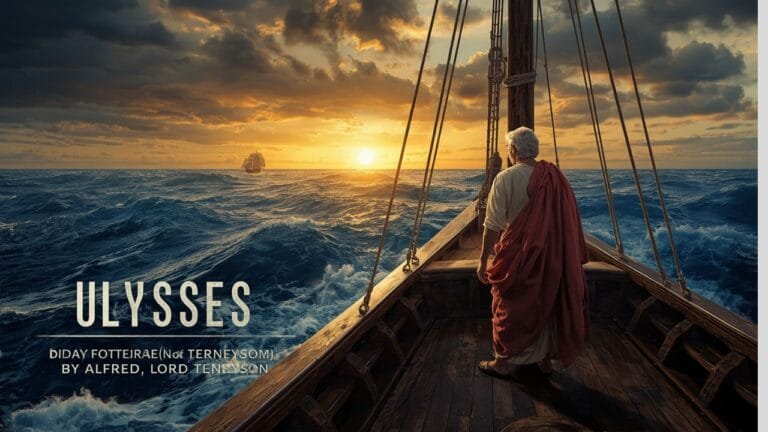
“Ulysses” is one of Alfred Lord Tennyson’s most famous dramatic monologues. It was written in 1833 and published in 1842. The poem is based on the legendary Greek hero Ulysses (Odysseus) from Homer’s Odyssey.
After returning safely to his kingdom of Ithaca following the Trojan War, Ulysses finds ordinary royal life boring and meaningless. Although he is now old, he refuses to spend the rest of his life sitting at home. Instead, he dreams of sailing once more with his loyal sailors to discover unknown lands and gain new knowledge.
The poem celebrates the spirit of adventure, courage, determination, lifelong learning, and the refusal to surrender to old age. It teaches that a person should continue striving for knowledge and greatness until the very end of life.
कविता परिचय (Hindi)
“Ulysses” अल्फ्रेड लॉर्ड टेनीसन की सबसे प्रसिद्ध कविताओं में से एक है। यह 1833 में लिखी गई और 1842 में प्रकाशित हुई। यह कविता यूनानी महाकाव्य Odyssey के महान नायक यूलिसिस (Odysseus) पर आधारित है।
ट्रोजन युद्ध के बाद यूलिसिस अपने राज्य इथाका (Ithaca) लौट आता है। लेकिन राजा का शांत जीवन उसे अच्छा नहीं लगता। वह फिर से समुद्र की यात्रा करना चाहता है और नई-नई जगहों की खोज करना चाहता है।
यद्यपि वह बूढ़ा हो चुका है, फिर भी उसके भीतर साहस, जिज्ञासा और कुछ नया सीखने की इच्छा समाप्त नहीं हुई है।
यह कविता हमें सिखाती है कि मनुष्य को जीवन के अंतिम क्षण तक सीखते रहना चाहिए, संघर्ष करते रहना चाहिए और कभी हार नहीं माननी चाहिए।
Deep Chapter Summary (English)
Introduction
The poem opens with Ulysses expressing his dissatisfaction with his present life. He is now an old king ruling Ithaca. Instead of enjoying peace and comfort, he feels trapped by the responsibilities of kingship. He believes that simply ruling over ordinary people who know nothing about him is a meaningless existence.
Ulysses’ Restlessness
Ulysses says that he cannot stop travelling because travelling has become his way of life. He wants to “drink life to the lees,” meaning he wants to experience every possible adventure before he dies.
He remembers the many experiences of his past:
- dangerous sea voyages,
- fierce storms,
- famous battles,
- different countries,
- strange cultures,
- kings,
- governments,
- and brave companions.
These adventures shaped his personality.
Experience Creates Endless Desire
Ulysses believes that every experience opens the door to another unknown experience.
He compares life to an arch through which we can see an even larger unknown world waiting to be explored.
According to him, knowledge has no limit.
The more we learn, the more we realize how much remains unknown.
Old Age Cannot Stop Him
Although Ulysses has become old, he refuses to become useless.
He compares an inactive person to a sword that becomes rusty if it is never used.
He believes that human life should always remain active.
Remaining alive without purpose is not true living.
Telemachus as the New King
Ulysses introduces his son Telemachus.
He praises his son for being wise, patient, responsible, gentle, and practical.
Unlike Ulysses, Telemachus enjoys governing people peacefully.
Therefore, Ulysses happily hands over the kingdom to him.
He says:
“He works his work, I mine.”
This means each person has a different purpose in life.
Final Call to Adventure
In the last section, Ulysses turns toward his old sailors.
Although all of them have become old, he believes they still possess brave hearts.
He encourages them to sail beyond the sunset in search of unknown lands.
He accepts that death may come during the journey.
Yet dying while pursuing a noble dream is far better than living without purpose.
The poem ends with one of the greatest inspirational lines in English literature:
“To strive, to seek, to find, and not to yield.”
This means:
- Keep striving.
- Keep searching.
- Keep discovering.
- Never surrender.
Major Themes
- Adventure
- Courage
- Never giving up
- Lifelong learning
- Old age and determination
- Leadership
- Human ambition
- Quest for knowledge
Character Sketch of Ulysses
- Brave
- Adventurous
- Intelligent
- Experienced
- Curious
- Determined
- Inspirational leader
- Never accepts defeat
- Loves knowledge
- Fearless before death
Moral of the Poem
The poem teaches that age should never stop us from learning, dreaming, exploring, or achieving great goals. A meaningful life is one spent continuously striving for knowledge, purpose, and self-improvement. The true spirit of humanity lies in never giving up, no matter how old we become.
Ulysses – Part 2
Deep Summary in Hindi (विस्तृत हिन्दी सारांश)
“Ulysses” अल्फ्रेड लॉर्ड टेनीसन की सबसे प्रसिद्ध कविताओं में से एक है। यह कविता यूनानी महाकाव्य Odyssey के महान नायक यूलिसिस (Odysseus) पर आधारित है। यह एक Dramatic Monologue (नाटकीय एकालाप) है, जिसमें केवल यूलिसिस स्वयं अपने विचार और भावनाएँ व्यक्त करता है।
कविता का मुख्य संदेश है कि मनुष्य को जीवन के अंतिम क्षण तक सीखते रहना चाहिए, संघर्ष करते रहना चाहिए और कभी हार नहीं माननी चाहिए।
प्रथम भाग – राजा का जीवन उसे अच्छा नहीं लगता
कविता की शुरुआत में यूलिसिस कहता है कि अब वह बूढ़ा हो चुका है और अपने राज्य इथाका (Ithaca) में राजा के रूप में रह रहा है।
उसकी पत्नी पेनेलोप (Penelope) भी वृद्ध हो चुकी है।
यद्यपि उसके पास राज्य, सम्मान और परिवार सब कुछ है, फिर भी वह संतुष्ट नहीं है।
उसे लगता है कि केवल सिंहासन पर बैठकर शासन करना उसके जीवन का उद्देश्य नहीं है।
वह कहता है—
“It little profits that an idle king…”
अर्थात् एक निष्क्रिय राजा का जीवन किसी काम का नहीं होता।
उसे लगता है कि उसकी प्रजा केवल खाने-पीने और सोने में व्यस्त रहती है तथा उसके महान जीवन और अनुभवों को नहीं समझती।
मुख्य भाव
- वर्तमान जीवन से असंतोष
- निष्क्रियता से घृणा
- साहसिक जीवन की इच्छा
द्वितीय भाग – यात्रा ही उसका जीवन है
यूलिसिस कहता है—
“I cannot rest from travel.”
अर्थात् मैं यात्रा किए बिना नहीं रह सकता।
वह जीवन को अंत तक पूरी तरह जीना चाहता है।
वह कहता है—
“I will drink life to the lees.”
इसका अर्थ है—
मैं जीवन की अंतिम बूंद तक हर अनुभव प्राप्त करना चाहता हूँ।
वह अपने पुराने जीवन को याद करता है।
उसने—
- समुद्रों की यात्रा की।
- भयंकर तूफानों का सामना किया।
- अनेक देशों को देखा।
- विभिन्न संस्कृतियों को जाना।
- युद्ध लड़े।
- महान योद्धाओं के साथ विजय प्राप्त की।
- ट्रॉय (Troy) के युद्ध में भाग लिया।
इन सभी अनुभवों ने उसे महान बनाया।
मुख्य भाव
- साहसिक जीवन
- अनुभवों का महत्व
- ज्ञान प्राप्त करने की इच्छा
तृतीय भाग – अनुभव कभी समाप्त नहीं होते
यूलिसिस का मानना है कि जीवन में प्राप्त प्रत्येक अनुभव केवल नए अनुभवों का द्वार खोलता है।
वह कहता है—
“All experience is an arch…”
अर्थात्
हर अनुभव एक ऐसे द्वार की तरह है जिसके आगे और भी बड़ा संसार छिपा हुआ है।
जितना अधिक मनुष्य सीखता है, उतना ही उसे महसूस होता है कि अभी बहुत कुछ जानना बाकी है।
इसलिए वह कभी रुकना नहीं चाहता।
मुख्य भाव
- ज्ञान अनंत है।
- सीखने की कोई सीमा नहीं।
- जीवन निरंतर खोज का नाम है।
चतुर्थ भाग – बुढ़ापा हार का कारण नहीं
यूलिसिस जानता है कि वह अब बूढ़ा हो चुका है।
लेकिन वह मानता है कि उम्र केवल शरीर की होती है, इच्छाशक्ति की नहीं।
वह कहता है कि यदि कोई तलवार उपयोग में न लाई जाए तो उसमें जंग लग जाती है।
इसी प्रकार यदि मनुष्य निष्क्रिय बैठ जाए तो उसका जीवन भी व्यर्थ हो जाता है।
वह कहता है कि केवल सांस लेना ही जीवन नहीं है।
सच्चा जीवन वही है जिसमें निरंतर कार्य, संघर्ष और सीखने की इच्छा हो।
मुख्य भाव
- कर्मशील जीवन
- वृद्धावस्था में भी उत्साह
- आलस्य का विरोध
पंचम भाग – टेलीमेकस को राज्य सौंपना
अब यूलिसिस अपने पुत्र टेलीमेकस (Telemachus) का परिचय देता है।
वह कहता है कि टेलीमेकस एक बुद्धिमान, धैर्यवान और जिम्मेदार शासक है।
वह जनता की समस्याओं को समझता है।
वह धीरे-धीरे लोगों को सही मार्ग पर ले जाएगा।
यूलिसिस को विश्वास है कि उसका पुत्र राज्य को अच्छी तरह संभाल सकता है।
इसलिए वह स्वयं फिर से समुद्री यात्रा पर जाने का निश्चय करता है।
वह कहता है—
“He works his work, I mine.”
अर्थात्
वह अपना कार्य करेगा और मैं अपना।
मुख्य भाव
- जिम्मेदार नेतृत्व
- पिता का विश्वास
- कर्तव्यों का विभाजन
षष्ठम भाग – अंतिम यात्रा का आह्वान
अब कविता का सबसे प्रेरणादायक भाग आता है।
यूलिसिस अपने पुराने नाविक साथियों को बुलाता है।
वह कहता है कि हम सब बूढ़े हो गए हैं।
लेकिन हमारे दिल आज भी वीर हैं।
वह उन्हें फिर से समुद्र की ओर चलने का निमंत्रण देता है।
वह कहता है—
“Come, my friends, ‘Tis not too late to seek a newer world.”
अर्थात्
दोस्तों! अभी भी नई दुनिया की खोज करने में देर नहीं हुई है।
वह जानता है कि यह यात्रा कठिन होगी।
हो सकता है कि वे समुद्र में डूब जाएँ।
हो सकता है कि वे जीवित न लौटें।
फिर भी वह यात्रा करना चाहता है क्योंकि बिना उद्देश्य के जीना उसे स्वीकार नहीं।
मुख्य भाव
- साहस
- नेतृत्व
- रोमांच
- जोखिम उठाने की प्रेरणा
अंतिम संदेश
कविता के अंत में यूलिसिस कहता है—
“To strive, to seek, to find, and not to yield.”
यह पूरी कविता का सबसे प्रसिद्ध संदेश है।
इसका अर्थ है—
- हमेशा प्रयास करते रहो।
- हमेशा नई चीज़ें खोजो।
- हमेशा सीखते रहो।
- कभी हार मत मानो।
यही इस कविता का मूल संदेश है।
कविता के प्रमुख विषय (Themes)
1. साहस (Courage)
हर परिस्थिति में आगे बढ़ने की प्रेरणा।
2. रोमांच (Adventure)
नई दुनिया देखने और नए अनुभव प्राप्त करने की इच्छा।
3. ज्ञान की खोज (Quest for Knowledge)
सीखने की प्रक्रिया कभी समाप्त नहीं होती।
4. वृद्धावस्था (Old Age)
उम्र बढ़ने के बाद भी मनुष्य महान कार्य कर सकता है।
5. नेतृत्व (Leadership)
अच्छा नेता अपने उत्तराधिकारी पर विश्वास करता है।
6. जीवन का उद्देश्य (Purpose of Life)
सार्थक जीवन वही है जिसमें निरंतर कर्म और सीखने की इच्छा हो।
प्रमुख प्रतीक (Symbols)
- Sea (समुद्र) → जीवन की चुनौतियाँ और अवसर।
- Journey (यात्रा) → अनुभव और ज्ञान की खोज।
- Sunset (सूर्यास्त) → जीवन का अंतिम चरण।
- Ship (जहाज़) → साहस और आगे बढ़ने की इच्छा।
- Telemachus → जिम्मेदारी और स्थिर नेतृत्व।
प्रमुख साहित्यिक अलंकार (Literary Devices)
- Metaphor (रूपक) – “Drink life to the lees.”
- Simile (उपमा) – “Like a sinking star.”
- Personification (मानवीकरण) – “The deep moans.”
- Imagery (चित्रात्मक वर्णन) – समुद्र, तारे, जहाज़, सूर्यास्त।
- Allusion (संकेत) – ट्रॉय, Achilles, Greek Mythology।
कविता की शिक्षा (Moral)
- जीवन भर सीखते रहना चाहिए।
- कठिनाइयों से कभी नहीं डरना चाहिए।
- उम्र सफलता की बाधा नहीं होती।
- जीवन का हर क्षण उपयोगी बनाना चाहिए।
- सच्चा विजेता वही है जो अंत तक प्रयास करता रहे।
परीक्षा के लिए महत्वपूर्ण बिंदु
- Poet: Alfred, Lord Tennyson
- Poem Type: Dramatic Monologue
- Main Character: Ulysses (Odysseus)
- Son: Telemachus
- Kingdom: Ithaca
- Major Themes: Adventure, Knowledge, Courage, Leadership, Determination, Old Age, Hope
- Most Famous Line: “To strive, to seek, to find, and not to yield.”
- Central Message: जीवन के अंतिम क्षण तक सीखते रहो, आगे बढ़ते रहो और कभी हार मत मानो।
Part 3: 50 MCQs with Answers (English)
Chapter: Ulysses – Alfred, Lord Tennyson
1. Who is the poet of Ulysses?
A. William Wordsworth
B. Robert Frost
C. Alfred, Lord Tennyson ✅
D. John Keats
2. What type of poem is Ulysses?
A. Sonnet
B. Ballad
C. Epic
D. Dramatic Monologue ✅
3. Who is Ulysses?
A. A Roman king
B. The legendary King of Ithaca ✅
C. A British sailor
D. A Greek priest
4. Where has Ulysses returned after his adventures?
A. Troy
B. Athens
C. Ithaca ✅
D. Sparta
5. Why is Ulysses unhappy?
A. He is poor.
B. He is sick.
C. He is tired of a dull life at home. ✅
D. He lost his kingdom.
6. According to Ulysses, what does an idle life bring?
A. Happiness
B. Fame
C. Wealth
D. No profit or satisfaction ✅
7. What does Ulysses want most?
A. To become richer
B. To continue travelling and exploring ✅
C. To rule strictly
D. To become famous
8. What does the phrase “drink life to the lees” mean?
A. Drink wine
B. Waste life
C. Experience life fully ✅
D. Live carelessly
9. Which war does Ulysses remember?
A. World War
B. Persian War
C. Trojan War ✅
D. Punic War
10. Ulysses says he has become ______.
A. A soldier
B. A famous name ✅
C. A priest
D. A farmer
11. “I am a part of all that I have met” means—
A. He owns everyone.
B. His experiences shaped his personality. ✅
C. He knows everyone.
D. He forgets everyone.
12. What does Ulysses compare life to?
A. A mountain
B. A river
C. An arch leading to unknown worlds ✅
D. A desert
13. What does Ulysses fear?
A. Death
B. Poverty
C. Growing inactive and useless ✅
D. Enemies
14. “To rust unburnished” symbolizes—
A. Growing stronger
B. Living without purpose ✅
C. Becoming rich
D. Becoming king
15. What does Ulysses seek?
A. Gold
B. Peace
C. Knowledge and adventure ✅
D. Power
16. Who is Telemachus?
A. Friend
B. Brother
C. Son of Ulysses ✅
D. Servant
17. What does Ulysses leave to Telemachus?
A. His sword
B. The kingdom and sceptre ✅
C. His ship
D. His treasure
18. How does Ulysses describe Telemachus?
A. Brave warrior
B. Lazy ruler
C. Wise and patient ruler ✅
D. Cruel king
19. Telemachus rules with—
A. Anger
B. Fear
C. Violence
D. Prudence and wisdom ✅
20. Ulysses says—
A. Telemachus will travel.
B. He works his work, I mine. ✅
C. We shall rule together.
D. I will stay home.
21. Whom does Ulysses address in the final section?
A. Soldiers
B. Citizens
C. His old sailors ✅
D. Priests
22. The sailors have shared—
A. Farming
B. Adventure and hardships ✅
C. Business
D. Hunting
23. According to Ulysses, old age still has—
A. Fear
B. Weakness
C. Honour and toil ✅
D. Rest
24. What does Ulysses say death does?
A. Gives happiness
B. Closes all ✅
C. Brings success
D. Creates knowledge
25. What does he still hope to do?
A. Become richer
B. Perform noble deeds ✅
C. Build a palace
D. Start farming
26. Which natural image appears near the end?
A. Rainbow
B. Twinkling lights and moon ✅
C. Desert
D. Snowstorm
27. “Come, my friends” shows—
A. Anger
B. Fear
C. Leadership and encouragement ✅
D. Sadness
28. What does Ulysses ask his friends to seek?
A. Treasure
B. Victory
C. A newer world ✅
D. A palace
29. Where does Ulysses wish to sail?
A. East
B. South
C. North
D. Beyond the sunset ✅
30. What may happen during the voyage?
A. Certain success
B. They may drown. ✅
C. Nothing
D. They may become kings.
31. Which hero does Ulysses hope to meet?
A. Hector
B. Odysseus
C. Achilles ✅
D. Paris
32. “Tho’ much is taken, much abides” means—
A. Everything is lost.
B. Though much is gone, much still remains. ✅
C. Nothing changes.
D. Wealth remains forever.
33. Ulysses admits he is—
A. Young
B. Rich
C. Old but determined ✅
D. Weak-minded
34. Time and fate have made the heroes—
A. Rich
B. Happy
C. Physically weaker ✅
D. Lazy
35. What remains strong?
A. Wealth
B. Kingdom
C. Army
D. Their willpower ✅
36. Which line is the poem’s famous ending?
A. Live and let live.
B. To strive, to seek, to find, and not to yield. ✅
C. Better late than never.
D. Time waits for none.
37. The central theme of the poem is—
A. Family life
B. Adventure and the search for knowledge ✅
C. Love
D. War
38. Which quality best describes Ulysses?
A. Lazy
B. Cowardly
C. Adventurous ✅
D. Selfish
39. The poem encourages readers to—
A. Give up easily
B. Stay idle
C. Keep striving despite old age ✅
D. Fear failure
40. The setting at the beginning is—
A. Battlefield
B. Kingdom of Ithaca ✅
C. Forest
D. Sea
41. Ulysses believes experience is—
A. Useless
B. Dangerous
C. A gateway to further knowledge ✅
D. Temporary
42. Which literary device is mainly used?
A. Dialogue
B. Dramatic Monologue ✅
C. Comedy
D. Ballad
43. “Sinking star” symbolizes—
A. Wealth
B. Knowledge beyond human limits ✅
C. Fear
D. Death only
44. Ulysses’ attitude toward old age is—
A. Hopeless
B. Negative
C. Positive and courageous ✅
D. Fearful
45. What does the poem celebrate?
A. Laziness
B. Riches
C. Human courage and determination ✅
D. Luxury
46. Which emotion dominates the poem?
A. Hatred
B. Jealousy
C. Restlessness ✅
D. Anger
47. Ulysses respects Telemachus because he—
A. Loves war
B. Can govern wisely ✅
C. Is adventurous
D. Is wealthy
48. The poem teaches that learning—
A. Ends with school
B. Ends in youth
C. Continues throughout life ✅
D. Is unnecessary
49. What is the message of the poem?
A. Rest is the best.
B. Wealth is everything.
C. Never stop learning, exploring, and striving. ✅
D. Stay at home forever.
50. Which quotation best summarizes Ulysses?
A. Knowledge is power.
B. Time is money.
C. To strive, to seek, to find, and not to yield. ✅
D. Honesty is the best policy.
notice : इस article लिखने के लिए हमने west bengal sylabus के class -12 English की पुस्तक का help लिए। हमारा उद्देश्य केवल छात्रों को शिक्षित करना है। Google से गुजारिश है हमारे post को रैंक करे और छात्रों को शिक्षित करने में हमारी मदद करे।