


The Bet
About the Author (English)
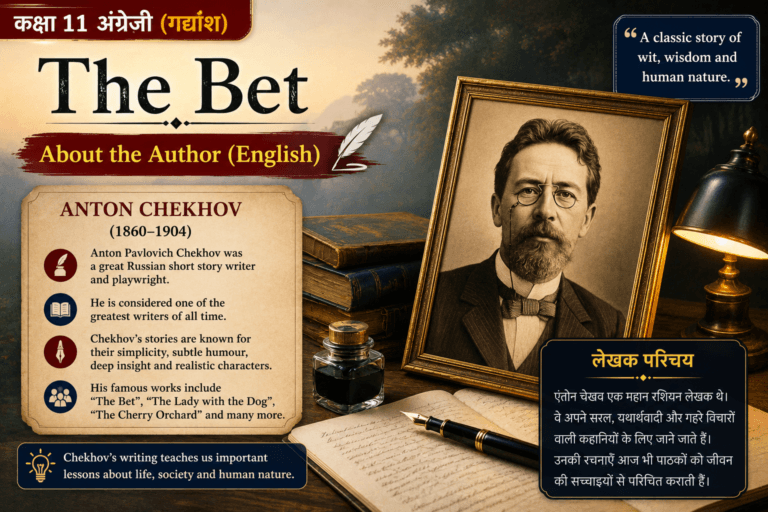
Anton Chekhov (1860–1904) was one of the greatest Russian playwrights and short-story writers in world literature. He was born on 29 January 1860 in Taganrog, Russia. Though he studied Medicine, he became famous for his remarkable literary works. Chekhov believed that literature should present life as it is, without judging people. His stories are admired for their realistic characters, psychological depth, simplicity, and powerful messages.
Some of his famous works include:
- The Bet
- The Lady with the Dog
- The Darling
- Ward No. 6
- The Cherry Orchard
- Uncle Vanya
- Three Sisters
Chekhov’s writings focus on human emotions, morality, loneliness, greed, hope, and the meaning of life. He passed away on 15 July 1904, but his works continue to inspire readers across the world.
लेखक परिचय (Hindi)
एंटोन चेखव (1860–1904) रूस के महान नाटककार और कहानीकार थे। उनका जन्म 29 जनवरी 1860 को रूस के टैगानरोग शहर में हुआ था। वे पेशे से डॉक्टर थे, लेकिन विश्वभर में अपनी उत्कृष्ट कहानियों और नाटकों के कारण प्रसिद्ध हुए।
चेखव की रचनाएँ मानव जीवन की वास्तविकताओं, भावनाओं, नैतिकता, लालच, अकेलेपन और जीवन के उद्देश्य को सरल भाषा में प्रस्तुत करती हैं। वे अपने पात्रों के माध्यम से गहरी मनोवैज्ञानिक समझ विकसित करते हैं।
उनकी प्रसिद्ध रचनाएँ हैं—
- The Bet
- The Lady with the Dog
- Ward No. 6
- The Cherry Orchard
- Uncle Vanya
- Three Sisters
उनका निधन 15 जुलाई 1904 को हुआ, लेकिन उनकी रचनाएँ आज भी विश्व साहित्य की अमूल्य धरोहर मानी जाती हैं।
About the Chapter (English)
The Bet is a thought-provoking short story by Anton Chekhov that explores profound questions about life, freedom, knowledge, wealth, greed, and human values.
The story begins with a discussion at a wealthy banker’s party about whether capital punishment (death penalty) is more humane than life imprisonment. During the heated debate, the banker confidently argues that death is better than lifelong imprisonment. A young lawyer disagrees, saying that living under any condition is better than dying.
Excited by the argument, the banker wagers two million rubles that the lawyer cannot remain in complete solitary confinement for fifteen years. The lawyer accepts the challenge.
During these fifteen years, the lawyer undergoes a remarkable transformation. At first, he suffers from loneliness and depression. Later, he dedicates himself to reading thousands of books on literature, philosophy, history, science, languages, religion, and theology. Through knowledge and self-reflection, he gradually realizes that money, luxury, fame, and worldly pleasures are temporary and meaningless.
Meanwhile, the banker loses most of his fortune because of poor financial decisions. On the night before the lawyer is to receive the money, the desperate banker decides to murder him. However, before committing the crime, he discovers a letter written by the lawyer.
In the letter, the lawyer declares that he now despises wealth and material possessions. To prove his detachment, he leaves the prison five hours before the agreed time, sacrificing the two million rubles.
The banker is deeply ashamed of his greed and hides the letter forever.
The story teaches that wisdom, spiritual growth, and inner peace are far more valuable than money or physical freedom.
The Bet
Deep Chapter Summary (Hindi)
“The Bet” एंटोन चेखव की विश्व प्रसिद्ध लघुकथा है। यह कहानी केवल एक शर्त की नहीं, बल्कि मानव जीवन, स्वतंत्रता, धन, ज्ञान, लालच, आध्यात्मिकता और जीवन के वास्तविक उद्देश्य की कहानी है। लेखक इस कहानी के माध्यम से यह संदेश देते हैं कि भौतिक सुख और धन क्षणिक हैं, जबकि ज्ञान और आत्मबोध ही मनुष्य की सबसे बड़ी संपत्ति हैं।
प्रारंभ – एक बहस से कहानी की शुरुआत
कहानी की शुरुआत एक अँधेरी शरद ऋतु की रात से होती है। एक धनी बैंकर अपने घर में पंद्रह वर्ष पहले हुई एक पार्टी को याद करता है। उस पार्टी में कई बुद्धिजीवी, पत्रकार और विद्वान उपस्थित थे। चर्चा का विषय था—
“मृत्युदंड (Death Penalty) अधिक मानवीय है या आजीवन कारावास (Life Imprisonment)?”
अधिकांश लोग मानते थे कि मृत्युदंड अमानवीय है और उसकी जगह आजीवन कारावास होना चाहिए।
लेकिन बैंकर इससे सहमत नहीं था। उसका मानना था कि यदि किसी व्यक्ति को मरना ही है, तो तुरंत मर जाना बेहतर है। जीवनभर जेल में रहना धीरे-धीरे मरने जैसा है।
तभी वहाँ उपस्थित 25 वर्षीय युवा वकील ने कहा—
“यदि मुझे चुनना पड़े, तो मैं आजीवन कारावास चुनूँगा। किसी भी स्थिति में जीवित रहना, मरने से बेहतर है।”
दो मिलियन की शर्त
इस बहस के दौरान बैंकर भावुक हो गया और उसने चुनौती दी—
“यदि तुम पंद्रह वर्ष तक अकेले रह सकते हो, तो मैं तुम्हें दो मिलियन रूबल दूँगा।”
वकील ने तुरंत शर्त स्वीकार कर ली।
यह तय हुआ कि वह 14 नवंबर 1870 से 14 नवंबर 1885 तक पूरी तरह अकेले रहेगा।
इन पंद्रह वर्षों में—
- वह किसी इंसान से नहीं मिलेगा।
- बाहर नहीं जाएगा।
- पत्र या समाचार पत्र नहीं पढ़ेगा।
- केवल छोटी खिड़की से किताबें, भोजन और आवश्यक वस्तुएँ मँगवा सकेगा।
यदि वह समय पूरा होने से पहले बाहर निकल गया, तो उसे धन नहीं मिलेगा।
कैद के पहले पाँच वर्ष
शुरुआत में वकील अकेलेपन से बहुत परेशान हो गया।
- वह दिन-रात पियानो बजाता था।
- प्रेम कहानियाँ और हल्के उपन्यास पढ़ता था।
- शराब और सिगरेट से दूर रहता था क्योंकि वे इच्छाएँ बढ़ाती थीं।
धीरे-धीरे उसका मन बदलने लगा।
ज्ञान की खोज
छठे वर्ष से उसने अपना पूरा जीवन अध्ययन को समर्पित कर दिया।
उसने पढ़ना शुरू किया—
- दर्शनशास्त्र
- इतिहास
- विज्ञान
- भाषाएँ
- साहित्य
- धर्म
- चिकित्सा
- मनोविज्ञान
उसने छह भाषाएँ सीख लीं।
उसने बैंकर को छह भाषाओं में पत्र लिखा और कहा—
यदि इनमें एक भी गलती न हो तो बगीचे में दो गोलियाँ चलाइए।
जब भाषाविदों ने पत्र सही पाया, तो बैंकर ने खुशी में दो गोलियाँ चलवाईं।
धर्म और आत्मज्ञान की ओर
दसवें वर्ष के बाद वकील का मन पूरी तरह बदल गया।
अब उसने केवल—
- बाइबिल
- गॉस्पेल
- धर्मशास्त्र
- आध्यात्मिक पुस्तकें
पढ़नी शुरू कर दीं।
उसे यह समझ आने लगा कि संसार की सारी वस्तुएँ नश्वर हैं।
अंतिम वर्षों में परिवर्तन
अंतिम वर्षों में वह हर विषय की पुस्तकें पढ़ने लगा।
वह पूरी मानव सभ्यता का ज्ञान प्राप्त करना चाहता था।
अब उसका मन धन से हट चुका था।
उसे समझ आ गया कि—
- धन नश्वर है।
- सौंदर्य नश्वर है।
- प्रसिद्धि नश्वर है।
- शरीर नश्वर है।
केवल ज्ञान और आत्मबोध ही स्थायी हैं।
बैंकर की बर्बादी
उधर पंद्रह वर्षों में बैंकर की आर्थिक स्थिति खराब हो गई।
शेयर बाजार में घाटा और गलत निवेश के कारण वह लगभग दिवालिया हो गया।
यदि उसे दो मिलियन देने पड़ते, तो वह पूरी तरह बर्बाद हो जाता।
हत्या का विचार
शर्त पूरी होने से एक रात पहले बैंकर ने सोचा—
यदि वकील जीवित रहा तो मुझे दो मिलियन देने होंगे।
इसलिए वह आधी रात को वकील की हत्या करने निकल पड़ा।
वह चुपके से कमरे में पहुँचा।
लेकिन वहाँ उसने एक कमजोर, बूढ़े और अत्यंत दुबले व्यक्ति को देखा।
उसके सामने एक पत्र रखा था।
वकील का पत्र
पत्र पढ़कर बैंकर स्तब्ध रह गया।
वकील ने लिखा—
मैं स्वतंत्रता, जीवन, स्वास्थ्य और धन—सबका तिरस्कार करता हूँ।
उसने लिखा—
पंद्रह वर्षों में मैंने पुस्तकों के माध्यम से पूरी दुनिया देख ली।
मैंने पर्वतों की चोटियाँ देखीं।
मैंने समुद्र, जंगल, नगर और मानव सभ्यता को जाना।
अब मुझे समझ आ गया है कि संसार का धन, वैभव और सुख केवल मृगतृष्णा है।
उसने कहा—
मैं उन दो मिलियन रुपयों को भी अस्वीकार करता हूँ।
और शर्त पूरी होने से पाँच घंटे पहले ही वह कमरा छोड़ देता है।
इस प्रकार उसने जानबूझकर शर्त हार ली।
बैंकर का पश्चाताप
पत्र पढ़कर बैंकर रो पड़ा।
उसे अपनी लालच, अहंकार और स्वार्थ पर शर्म आई।
उसने पत्र को छिपाकर अपनी तिजोरी में रख दिया ताकि किसी को इस घटना का पता न चले।
कहानी का मुख्य संदेश
इस कहानी से हमें अनेक महत्वपूर्ण शिक्षाएँ मिलती हैं—
- धन से अधिक मूल्यवान ज्ञान है।
- भौतिक सुख अस्थायी हैं।
- पुस्तकें मनुष्य का जीवन बदल सकती हैं।
- अकेलापन आत्मचिंतन का अवसर बन सकता है।
- लालच अंततः विनाश का कारण बनता है।
- सच्ची स्वतंत्रता मन की स्वतंत्रता है।
- आध्यात्मिक ज्ञान भौतिक संपत्ति से कहीं अधिक श्रेष्ठ है।
- जीवन का उद्देश्य केवल धन कमाना नहीं, बल्कि स्वयं को जानना है।
Conclusion (निष्कर्ष)
“The Bet” केवल दो व्यक्तियों की शर्त की कहानी नहीं है, बल्कि यह मानव जीवन के गहरे दर्शन को प्रस्तुत करती है। बैंकर धन के पीछे भागता है और अंत में पश्चाताप करता है, जबकि वकील ज्ञान और आत्मबोध प्राप्त कर संसार के सभी भौतिक सुखों का त्याग कर देता है। कहानी हमें सिखाती है कि सच्ची समृद्धि धन में नहीं, बल्कि ज्ञान, आत्मसंयम, आध्यात्मिकता और आंतरिक शांति में होती है।
The Bet –
50 MCQs with Answers (English)
1. Who is the author of “The Bet”?
A. Leo Tolstoy
B. Anton Chekhov
C. Maxim Gorky
D. Charles Dickens
Answer: B. Anton Chekhov
2. What was the main topic of discussion at the banker’s party?
A. Education
B. Religion
C. Capital Punishment
D. Business
Answer: C. Capital Punishment
3. Who opposed the banker’s opinion?
A. Judge
B. Doctor
C. Young Lawyer
D. Teacher
Answer: C. Young Lawyer
4. How old was the lawyer when the bet was made?
A. 20 years
B. 25 years
C. 30 years
D. 35 years
Answer: B. 25 years
5. How much money did the banker offer in the bet?
A. One Million Rubles
B. Two Million Rubles
C. Five Million Rubles
D. Ten Million Rubles
Answer: B. Two Million Rubles
6. How many years did the lawyer agree to stay in confinement?
A. 5 Years
B. 10 Years
C. 15 Years
D. 20 Years
Answer: C. 15 Years
7. Where was the lawyer kept?
A. Prison
B. Hotel
C. Lodge in the banker’s garden
D. Temple
Answer: C. Lodge in the banker’s garden
8. What was the lawyer not allowed to do?
A. Read books
B. Receive food
C. Meet people
D. Sleep
Answer: C. Meet people
9. How could he receive books and food?
A. By servants
B. Through a small window
C. By post
D. Through friends
Answer: B. Through a small window
10. Which instrument did the lawyer play during the first year?
A. Guitar
B. Piano
C. Violin
D. Flute
Answer: B. Piano
11. What kind of books did he read in the first year?
A. Science books
B. Religious books
C. Light novels
D. Poetry
Answer: C. Light novels
12. Why did the lawyer avoid wine?
A. It was expensive.
B. It increased desires.
C. He disliked it.
D. It was unavailable.
Answer: B. It increased desires.
13. Which subjects did he study later?
A. Philosophy and History
B. Languages
C. Science
D. All of these
Answer: D. All of these
14. How many languages did the lawyer learn?
A. Four
B. Five
C. Six
D. Seven
Answer: C. Six
15. What did he ask the banker to do if his letter had no mistakes?
A. Ring a bell
B. Fire two shots
C. Send flowers
D. Visit him
Answer: B. Fire two shots
16. What book did he mainly read after the tenth year?
A. Quran
B. Bhagavad Gita
C. Gospel
D. Dictionary
Answer: C. Gospel
17. What happened to the banker’s wealth over the years?
A. It increased.
B. It remained the same.
C. It decreased.
D. It doubled.
Answer: C. It decreased.
18. Why did the banker become worried?
A. He became sick.
B. He had lost his fortune.
C. He lost his family.
D. He lost his house.
Answer: B. He had lost his fortune.
19. What terrible plan did the banker make?
A. Escape
B. Theft
C. Murder the lawyer
D. Burn the lodge
Answer: C. Murder the lawyer
20. What did the banker find when he entered the room?
A. The lawyer was dead.
B. The lawyer had escaped.
C. The lawyer was sleeping.
D. The room was empty.
Answer: C. The lawyer was sleeping.
21. How did the lawyer look after 15 years?
A. Healthy
B. Strong
C. Old and weak
D. Fat
Answer: C. Old and weak
22. What was lying on the table?
A. Money
B. Food
C. A letter
D. A key
Answer: C. A letter
23. What did the lawyer say about money?
A. He wanted more.
B. He respected it.
C. He despised it.
D. He saved it.
Answer: C. He despised it.
24. What did books give the lawyer?
A. Wealth
B. Wisdom
C. Fame
D. Power
Answer: B. Wisdom
25. What did the lawyer renounce?
A. His house
B. His family
C. Two Million Rubles
D. His books
Answer: C. Two Million Rubles
26. How many hours before the end did he leave?
A. One Hour
B. Three Hours
C. Five Hours
D. Ten Hours
Answer: C. Five Hours
27. Why did he leave early?
A. He was afraid.
B. He hated the banker.
C. He wanted to reject worldly wealth.
D. He forgot the time.
Answer: C. He wanted to reject worldly wealth.
28. What did the banker do after reading the letter?
A. Burned it
B. Hid it in his safe
C. Published it
D. Gave it to police
Answer: B. Hid it in his safe
29. What feeling did the banker experience?
A. Pride
B. Anger
C. Shame
D. Happiness
Answer: C. Shame
30. What happened to the lawyer the next morning?
A. He died.
B. He escaped.
C. He was arrested.
D. He returned.
Answer: B. He escaped.
31. What does the story mainly teach?
A. Money is everything.
B. Knowledge is greater than wealth.
C. Gambling is good.
D. Rich people are always happy.
Answer: B. Knowledge is greater than wealth.
32. The banker was a __________.
A. Teacher
B. Businessman
C. Banker
D. Doctor
Answer: C. Banker
33. The story begins on a __________ night.
A. Summer
B. Spring
C. Autumn
D. Winter
Answer: C. Autumn
34. Who translated the story into English?
A. Ruskin Bond
B. Constance Garnett
C. Shakespeare
D. Dickens
Answer: B. Constance Garnett
35. Which quality changed the lawyer?
A. Wealth
B. Solitude and Study
C. Fame
D. Luxury
Answer: B. Solitude and Study
36. The banker became poor because of ________.
A. Charity
B. Gambling and bad investments
C. Theft
D. Taxes
Answer: B. Gambling and bad investments
37. Which theme is central to the story?
A. Love
B. Adventure
C. Greed vs Wisdom
D. War
Answer: C. Greed vs Wisdom
38. What did the lawyer value most at the end?
A. Money
B. Books and wisdom
C. Fame
D. Luxury
Answer: B. Books and wisdom
39. The lawyer’s transformation was mainly ________.
A. Physical
B. Spiritual and Intellectual
C. Financial
D. Political
Answer: B. Spiritual and Intellectual
40. Which punishment did the lawyer prefer?
A. Death Penalty
B. Life Imprisonment
C. Fine
D. Exile
Answer: B. Life Imprisonment
41. Who won the moral victory?
A. Banker
B. Lawyer
C. Watchman
D. Guests
Answer: B. Lawyer
42. What emotion kept the banker awake?
A. Joy
B. Fear
C. Excitement
D. Pride
Answer: B. Fear
43. What is the symbol of freedom in the story?
A. Money
B. Books
C. Inner Peace
D. House
Answer: C. Inner Peace
44. The lawyer proved that ________.
A. Money gives happiness.
B. Knowledge changes life.
C. Wealth is permanent.
D. Prison is enjoyable.
Answer: B. Knowledge changes life.
45. The banker kissed the lawyer because he felt ________.
A. Proud
B. Guilty
C. Angry
D. Excited
Answer: B. Guilty
46. What literary form is “The Bet”?
A. Novel
B. Play
C. Short Story
D. Poem
Answer: C. Short Story
47. Which value is criticized in the story?
A. Honesty
B. Greed
C. Kindness
D. Patience
Answer: B. Greed
48. Which value is praised in the story?
A. Luxury
B. Wisdom
C. Pride
D. Wealth
Answer: B. Wisdom
49. What does the ending suggest?
A. Wealth is eternal.
B. Spiritual knowledge is superior to material wealth.
C. Lawyers are always right.
D. Bankers always win.
Answer: B. Spiritual knowledge is superior to material wealth.
50. What is the best title for the lesson’s message?
A. The Power of Money
B. Knowledge Over Wealth
C. Winning the Bet
D. A Rich Man’s Story
Answer: B. Knowledge Over Wealth
notice : इस article लिखने के लिए हमने west bengal sylabus के class -12 English की पुस्तक का help लिए। हमारा उद्देश्य केवल छात्रों को शिक्षित करना है। Google से गुजारिश है हमारे post को रैंक करे और छात्रों को शिक्षित करने में हमारी मदद करे।



1 thought on “The Bet”
Great content! Keep up the good work!